


Metro Manila faces a severe urban mobility crisis with long commutes fueling pollution, heavy fossil-fuel energy use, and climate vulnerability. The transport sector is among the largest contributors to greenhouse gas (GHG) emissions in the Philippines, accounting for roughly 22.8% of the country’s total GHG emissions in 2020. In that year, road transport, the dominant mode in Metro Manila contributed the vast bulk of these emissions.
A sustainable transport option quietly flows through the city’s heart, the Pasig River Ferry System (PRFS). Many Filipinos endure hours-long journeys across the metro simply to reach school or work. In this landscape of scarcity, congestion, and environmental degradation, exploring other options of transportation becomes both urgent and necessary.
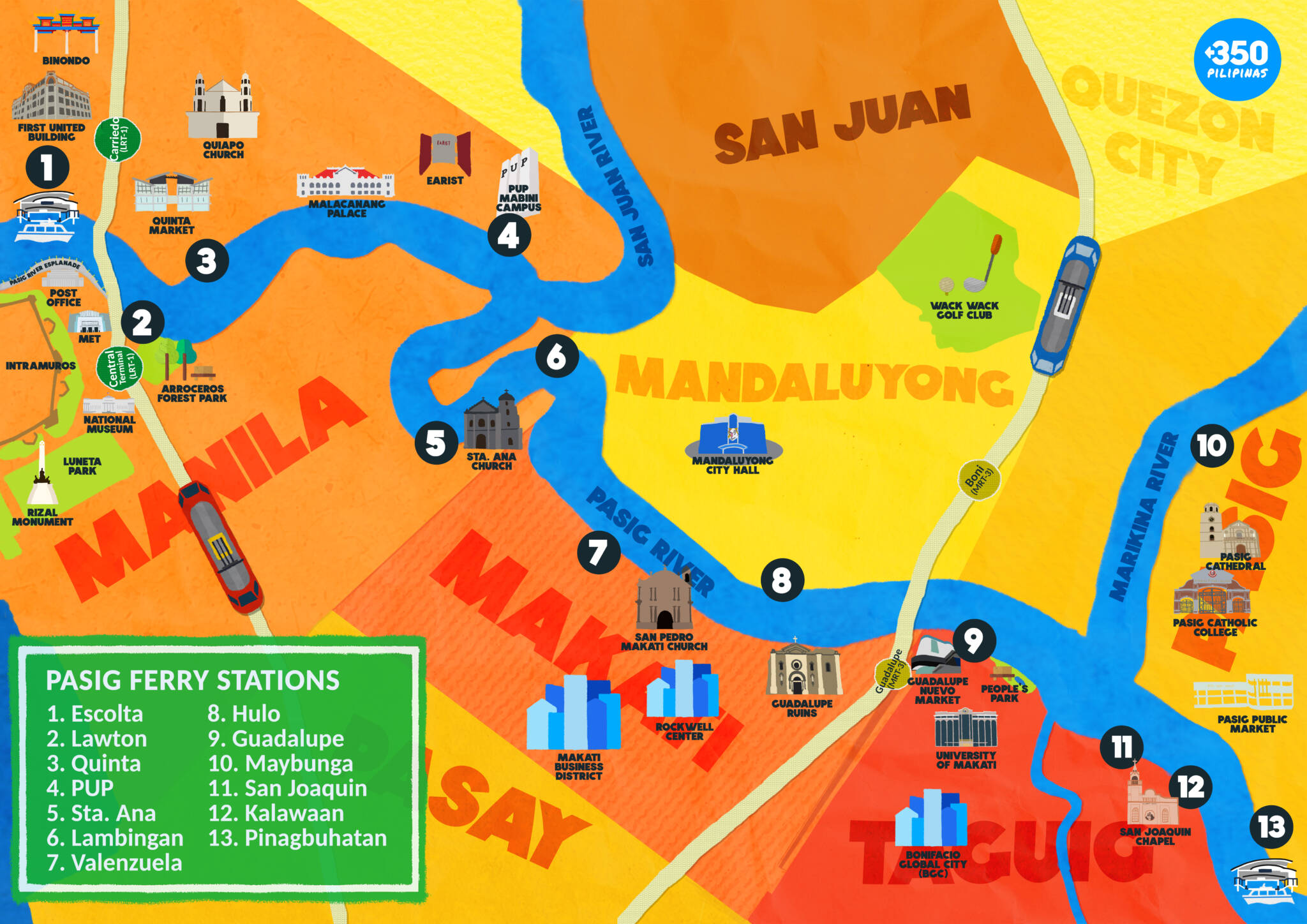
Pasig River Ferry Stations covers stations located in major cities in Manila
Discover the Pasig River Ferry for a cleaner, faster, and more sustainable way to move around the city, helping cut emissions and make travel smarter.
Download this brochure to learn how you can ride and explore the ferry.
Pasig River Ferry System as Sustainable Mobility Initiative for the Youth
The Pasig River Ferry System (PRFS) offers a promising, environmentally friendly alternative to traditional urban transport. With ferry stations located near urban centers and major educational institutions such as the Polytechnic University of the Philippines, Philippine Normal University, Pamantasan ng Lungsod ng Maynila, Universidad de Manila, and Lyceum of the Philippines University, the PRFS has significant potential to serve the youth while advancing sustainable and inclusive urban mobility.
The #YOB Video Series spotlight perspectives of advocates, ferry administrators, and daily commuters on the Pasig River Ferry highlighting it as a viable, sustainable, and culturally rooted mode of public transportation.
Survey-based insights from young commuters on the ferry’s potential as a greener, more viable mode of travel.
Amid Metro Manila’s severe traffic congestion and fragmented transport systems, the Pasig River Ferry System (PRFS) is emerging as a promising, low-carbon alternative. Once a pioneer in Asian mobility, the city now struggles with road dependence, ranking 58th out of 60 cities in the 2022 Urban Mobility Readiness Index. Long commutes, air pollution, and greenhouse gas emissions have become part of daily life but the Pasig River offers a path toward cleaner, faster, and more resilient travel.
Reintroducing the Pasig River Ferry
Once a lifeline of Metro Manila, the Pasig River is finding its way back into the city’s transport future.
350PH Campaigner, Jheny shares insights on how the PRFS can be better integrated into the broader public transport network. Ferry systems, when connected with other modes of transport, help diversify mobility options in dense cities, reducing road congestion, cutting carbon emissions, and creating more people-centered urban spaces.
A Low-Carbon Alternative
Water-based transport presents clear environmental advantages. Each ferry can remove dozens of cars from the road, reducing CO₂ emissions, fuel consumption, and air pollution. Ferries also bypass road congestion, maintain stable travel times, and offer resilience during floods, road closures, and disasters, critical in a climate-vulnerable city like Metro Manila.
Transport That Cares for the River
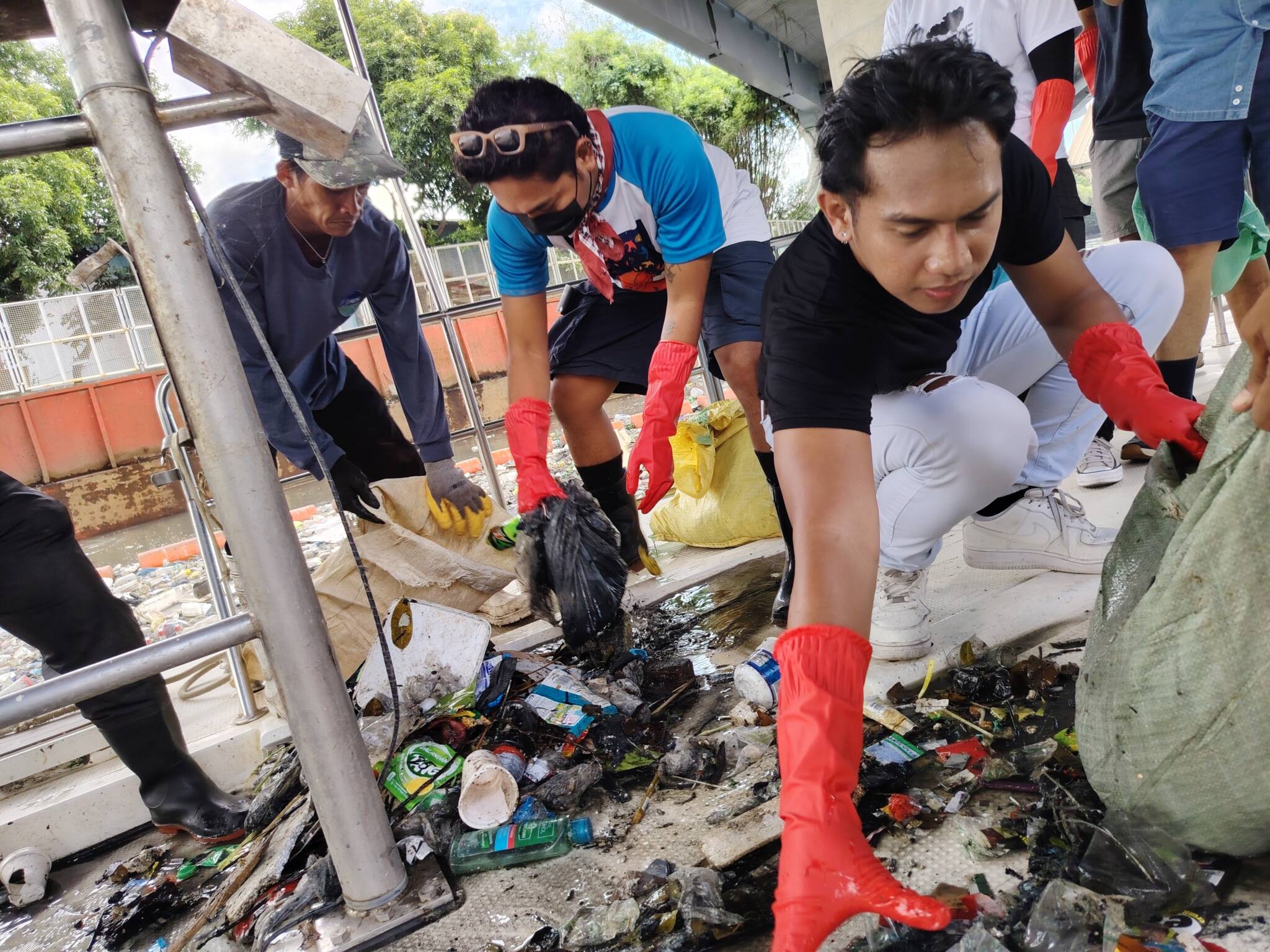
Making the ferry accessible also means caring for the river it runs on. Featuring Irene Nivera of the MMDA highlighting how free access to the Pasig River Ferry encourages more people to choose water transport. At the same time, continuous river clean-up efforts ensure that increased ferry usage goes hand in hand with improving the river’s health. The more the ferry is used, the stronger the push to protect and rehabilitate the Pasig River, showing how mobility and environmental stewardship can move forward together.
Modernizing the Ferry System
Keeping the ferry system running requires more than boats, it needs coordination, innovation, and people.
Cecile Baluran of the Pasig River Ferry Service shares how group chats and digital platforms are being used to communicate routes, schedules, and updates directly to commuters. She also points out key challenges faced by the service, including limited manpower and the need for additional boats.
Looking ahead, the integration of renewable energy, with electric boats already being deployed, marks a major step toward a cleaner and more climate-resilient ferry system for Metro Manila. We hope that in the future more ferry boats can be deployed.
Youth at the Center of Sustainable Mobility
Young people hold a critical role in shaping the future of transportation, climate action, and urban development in Metro Manila. Highly mobile, technologically savvy, and directly affected by the city’s dysfunctional transport systems, students experience the consequences of long commutes, unreliable public transit, and car-centric urban planning.
These daily challenges impact educational performance, mental well-being, financial stability, and personal growth. In a city where trips that should take minutes can stretch into hours, mobility becomes a barrier to equity rather than a gateway to opportunity.
The River at the Center
The Pasig River is Metro Manila’s frontliner against flooding, a regulator of heat, and a living environmental system surrounded by one of the most urbanized regions in the country.
Joven Jacolbia of Ilog Pasiglahin reminds us why protecting the river matters. From heritage tours to community-led initiatives, reconnecting people to the Pasig River strengthens environmental awareness and collective responsibility.
When we recognize the river’s role in both transportation and climate resilience, we begin to see it beyond as a barrier but as the heart of the city.
Placing the youth at the center of sustainable mobility discourse is both strategic and necessary. They represent the largest group of public transport users, possess the strongest potential for long-term behavioral shifts, and act as catalysts for cultural change in mobility choices.
Globally, younger generations are increasingly adopting climate-conscious lifestyles, seeking transport systems that are safe, affordable, efficient, and environmentally responsible. Their openness to alternative modes such as cycling, walking, electric vehicles, and water-based transport creates an enabling environment for systems like the PRFS to thrive.
Commuting Through the River
From the perspective of daily commuters, the Pasig River Ferry is a lifeline.
For workers like Chary, the ferry system provides free, reliable transport, easing the burden of daily commuting costs while offering a faster and less congested route.
At the same time, commuters highlight the need for more ferry boats and better integration with existing public transport systems to maximize its impact.
The PRFS directly intersects with the youth mobility landscape. Many ferry stations are embedded within university belts and educational corridors, allowing students to bypass congested roads, reduce travel costs, and access campuses more efficiently. With modernization, strengthened operations, and improved reliability, the PRFS has the potential to transform daily commutes, turning a previously neglected waterway into a vital mobility artery linking schools, communities, and economic hubs.
Involving youth in the revitalization of the PRFS also fosters participatory urbanism, designing transport systems based on user experience and social needs. Students can contribute through research, advocacy, user experience design, campus awareness campaigns, and policy feedback loops, enhancing the ferry’s relevance while cultivating a generation of mobility-literate citizens who understand the interplay between transportation, climate resilience, and livable cities.
Students on Board
For students, time matters, and the river makes a difference.
Through the lens of a PUP student, the Pasig River Ferry shows how water transport can mean faster travel times, less stress, and a better daily commute. Norms shares the hope that more students will patronize public transportation, choosing sustainable options that benefit both people and the planet.
When the youth embrace public transport, they help shape a future of cleaner, fairer, and more livable cities.
Centering young people in the PRFS narrative transforms the system from a nostalgic infrastructure experiment into a forward-looking, sustainable mobility solution. It addresses inequality, improves educational access, promotes low-carbon urban transport, and nurtures a cultural reconnection with the Pasig River.
The choices, habits, and aspirations of today’s youth will determine whether Metro Manila continues to rely on unsustainable, congestion-driven mobility or embraces a multimodal, inclusive, and climate-neutral future. By focusing on young commuters, the PRFS initiative does more than provide an alternative transport option, it represents a generational opportunity to redefine how Metro Manila moves, learns, and lives.
Cycling, walking, electric vehicles, and water-based transport creates an enabling environment for systems like the PRFS to thrive.
2025 PRFS Survey Insights
Youth Perceptions: Positive Potential, Low Awareness
A survey of 153 young commuters reveals strong interest but limited engagement with the PRFS. Key findings include:
- Positive perceptions, high neutrality: Over 60% see value in the ferry for sustainability, safety, and convenience, yet 30–35% remain neutral, highlighting a lack of awareness rather than opposition.
- Cultural appreciation: Nearly 65% recognize the ferry’s heritage value, though a third remain neutral, suggesting surface-level understanding.
- Promotion gaps: More than 65% have never seen ferry-related advertisements, and 35% are unaware that rides are free, a significant barrier for cost-sensitive students.
- Usage patterns: Over 85% are new users; 65% ride occasionally. Despite low habitual use, 78% reach destinations in under an hour, demonstrating competitive travel times.
Accessibility and service quality: Stations near PUP, Guadalupe, Lawton, and Escolta are convenient, but last-mile connectivity, lighting, signage, and PWD access need improvement.
Unlocking the Ferry’s Potential
To transition the PRFS from an occasional curiosity into a youth-friendly, sustainable transport option, the study recommends:
- Accelerate low-carbon mobility: Expand the PRFS to reduce traffic and emissions.
- Integrate into Metro Manila’s transport network: Recognize ferries as a formal transit tier alongside buses, jeepneys, and rail.
- Enhance multimodal connectivity: Link terminals with public transport, bike lanes, and pedestrian walkways.
- Launch campus-centered awareness campaigns: Reach students through schools, universities, and digital platforms.
- Maintain free or subsidized fares: Ensure affordability for students and youth.
- Expand routes and align schedules: Focus on university corridors and peak student hours.
- Strengthen river maintenance: Ongoing dredging, waste management, and cleanup programs.
- Engage youth in design and advocacy: Build participatory urbanism and mobility literacy.
- Highlight cultural value and climate benefits: Storytelling and in-transit education to reinforce heritage and environmental impact.
- Use the ferry as a living laboratory: Partner with universities for experiential learning and research projects.
Metro Manila’s mobility crisis demands bold, sustainable solutions. The Pasig River Ferry Service is uniquely positioned to deliver cleaner transport, faster commutes, and renewed life to the river. With improved connectivity, reliable operations, and youth-centered outreach, the PRFS can evolve into a central pillar of low-carbon mobility and a revived civic space for the next generation.
Youth on Board is an initiative under the sustainable transport program of 350 Pilipinas, aiming to promote and mainstream diverse modes of transport that are inclusive, sustainable, and safe for the youth.