
Ogie Atadero
On a recent visit to Casiguran, Aurora, I was struck by how being at the “end of the line” is both a geographic condition and an infrastructural vulnerability. As a coastal municipality and the most urbanized town in northern Aurora, Casiguran is known for its pristine beaches and rich mangrove ecosystems, yet its location at the northeastern edge of Luzon places it at the far reach of a centralized grid that often fails when it is needed most. Here, electricity is not just infrastructure—it is survival. Recurrent typhoons routinely trigger prolonged outages, making decentralized and resilient renewable energy solutions less of a future ambition and more of an immediate necessity.
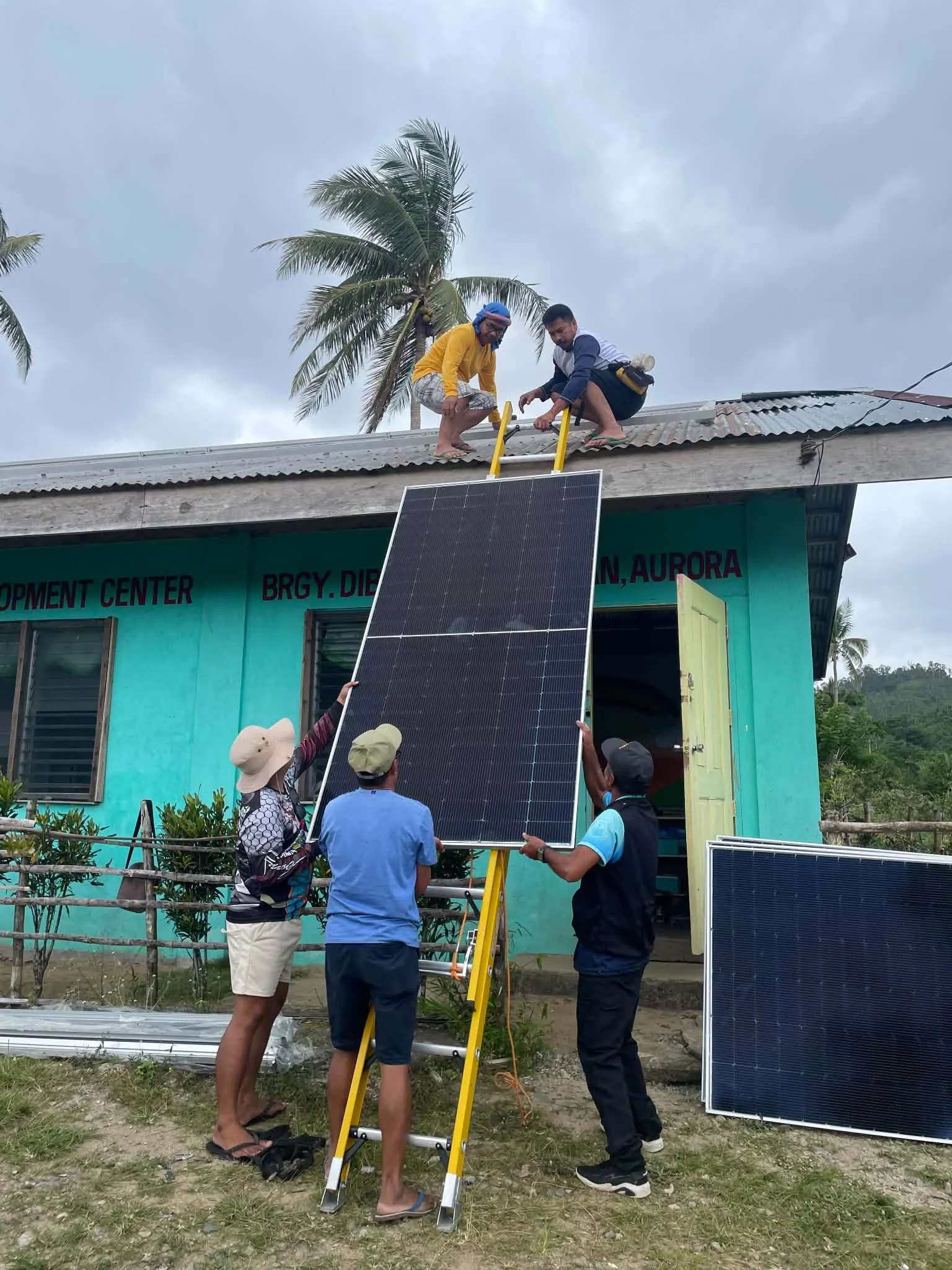
Residents and community members of Barangay Dibet work together to install solar panels, providing a sustainable power source for the barangay’s Child Development Center. Photo: Jesus Cezar
And yet, what I encountered was not resignation, but a quiet shift toward intentional design. Casiguran is beginning to explore local energy planning as a way of reclaiming control—mapping its own energy reality by looking closely at actual demand in barangay halls, health centers, and schools, especially during emergencies. Instead of depending on distant supply decisions, the approach is increasingly grounded in aligning systems with lived needs and locally available renewable resources.
My first engagement in Casiguran began in August 2025, when I introduced our work and explored a possible partnership with the local government on community-centered renewable energy. During a site visit in Barangay Tres, I met with four Punong Barangays and shared small-scale renewable energy concepts designed around local conditions. What began as an introduction quickly evolved into exchange, as we invited local stakeholders to visit one of our long-term collaborations with the Polytechnic University of the Philippines – Institute of Technology (PUP-ITech), where student-led innovations have been translated into real-world applications.
This early exchange opened the door to a broader learning process. Representatives from Casiguran—including the Municipal Environment and Natural Resources Office (MENRO) and the Department of the Interior and Local Government (DILG)—later joined the Institute for Climate and Sustainable Cities’ Energy Transition Dialogue in Quezon City, where they met other LGUs from Region VIII and observed how local governments are advancing energy transition strategies rooted in both economic and climate resilience.
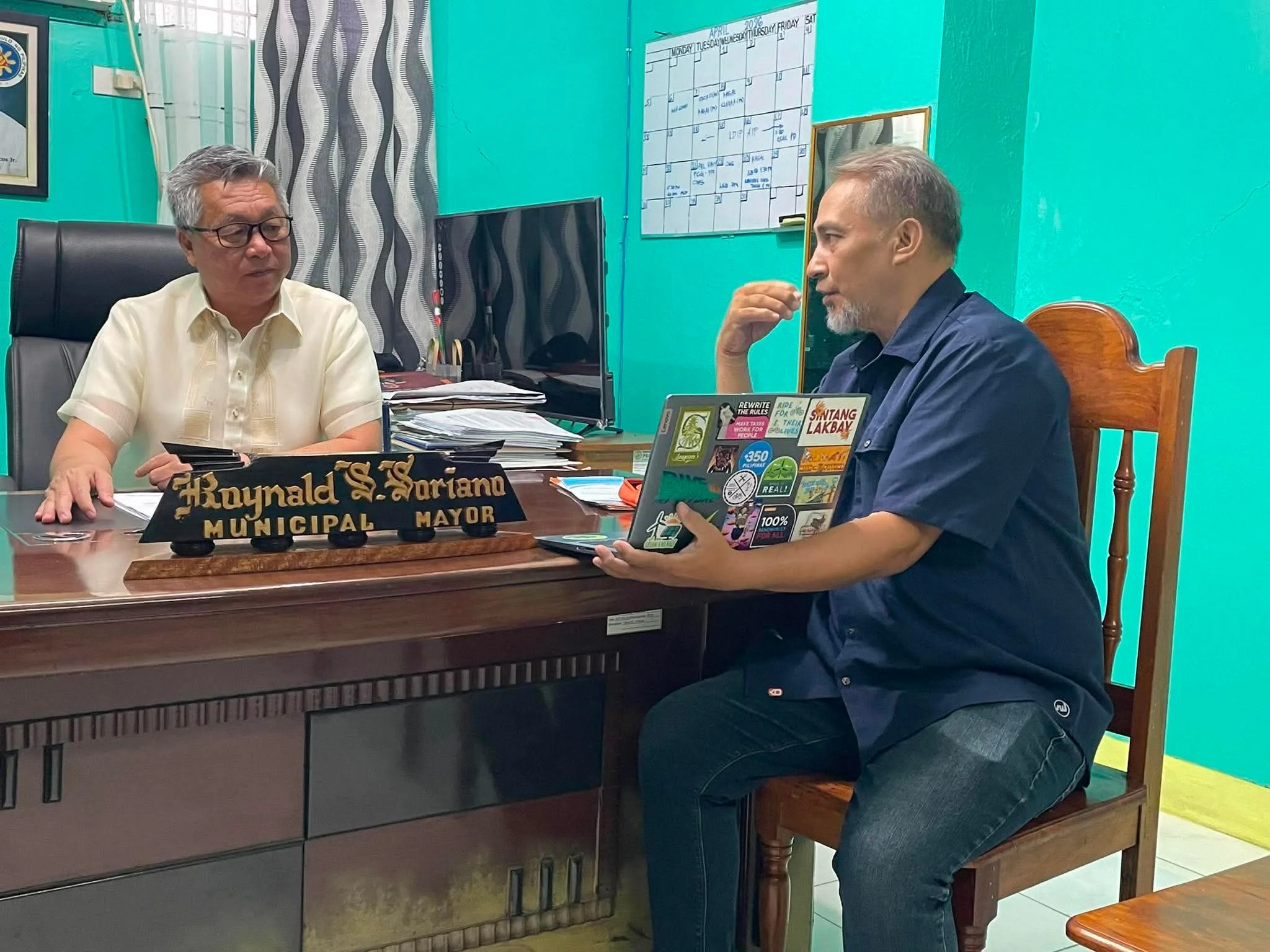
350 Pilipinas’ Energy Transition Campaigner Ogie Atadero meets with Mayor Raynald S. Soriano to deepen the development of the Local Energy Efficiency and Conservation Plan (LEECP), a vital governance tool designed to institutionalize energy resilience and cost-saving targets across Casiguran’s public facilities. Photo: Jesus Cezar
The conversation deepened in a second meeting with Mayor Raynald S. Soriano, centering on the development of a Local Energy Efficiency and Conservation Plan (LEECP). Framed not as a compliance exercise but as a governance tool, the LEECP enables LGUs to set targets, monitor consumption, and reduce costs across public facilities. To support this, we discussed forming a Technical Working Group led by the Mayor’s Office, appointing an Energy Efficiency and Conservation Officer, and sustaining capacity-building efforts to ensure implementation goes beyond documentation.
Even as these policy foundations take shape, the transition is already visible on the ground. In Barangay Dibet, solar energy now powers key community spaces—including the health center, child development center, basketball court, and barangay hall—while also supporting internet connectivity that keeps residents linked even in remote conditions. In moments when schools are not in use, excess energy is redirected to nearby households, turning electricity into a shared resource rather than a confined utility. In Barangay Lual, similar pathways are emerging, with preparations underway for solarizing their Barangay Hall.
What stayed with me most was how resilience is being redefined in practice. In Casiguran, energy transition is not framed as a distant climate goal, but as something immediate and lived: keeping lights on after storms, keeping clinics running, keeping communication alive when everything else is cut off. Even small innovations like mobile solar charging systems reflect how grounded and adaptive this approach has become.
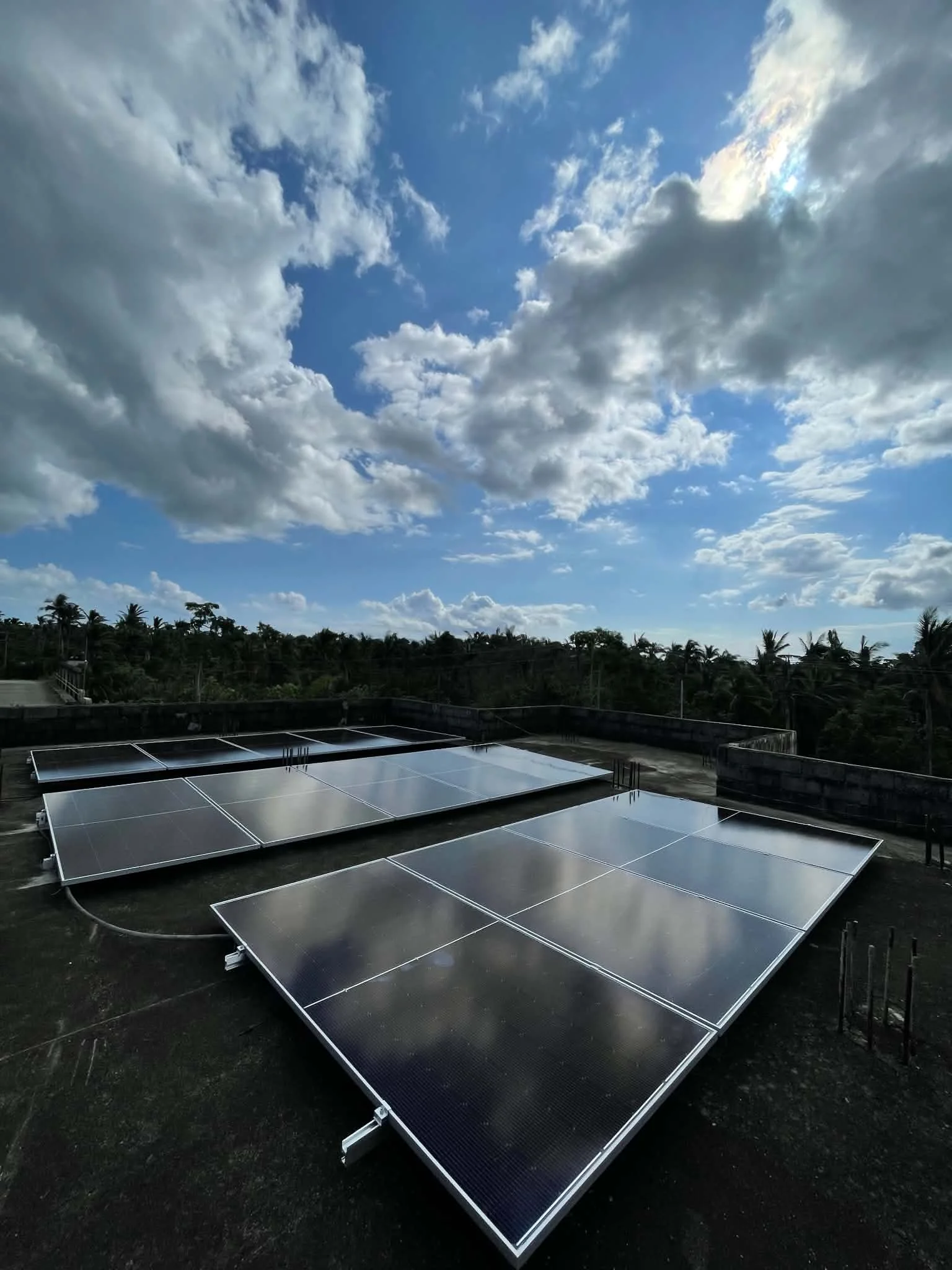
This 8kW peak capacity solar rooftop installation in Barangay Dibet powers critical community facilities and serves as a vital energy hub during typhoons and power interruptions. Photo: Jesus Cezar
Casiguran remains at the edge of the grid, but it is increasingly helping define a different center—one where energy is planned locally, shared collectively, and treated as a public good. Taken together, these efforts point to something larger than individual projects. They signal a shift from vulnerability to design, from dependence on distant systems to building locally rooted energy futures that are adaptive, shared, and resilient. With sustained collaboration and strong local leadership, it is becoming clear that Casiguran’s energy transition is not only about infrastructure, but about reimagining how communities generate, share, and sustain power in a time of climate uncertainty.