
Jean Coper
Youth Engagement Campaigner
Teaching children has always held a special place in my heart. I used to teach Korean students, and the moment I got that invite, I felt that familiar excitement come rushing back.
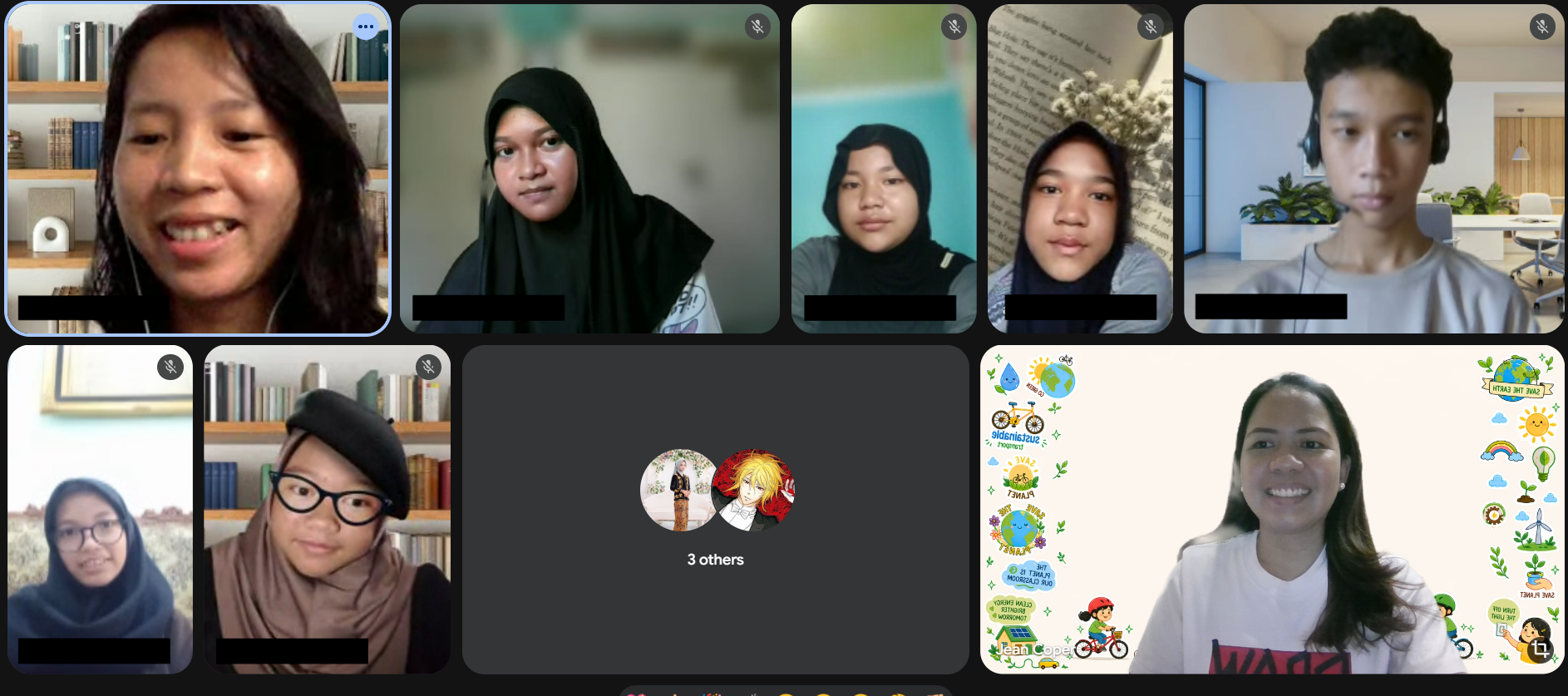
A friend of mine and a volunteer teacher from Indonesia sent me the warmest invite recently. She has been teaching kids English and helping her students learn about the wider world and climate action. And she wanted me to join her class online for an hour to talk about my work in the Philippines.
I said yes right away.
I was so happy and excited to meet these wonderful kids and share some of our campaigns here in the Philippines. They were all attentive, introducing themselves and sharing a glimpse of their dreams even though there was a language barrier. The energy in that virtual room was real. How we see it, youth are a vital part of this work right now. When we involve them early, we plant seeds of awareness, empathy, and action that will grow with them for the rest of their lives.
Two island nations. One screen. A room full of aspiring youth.
Indonesia and the Philippines are neighbors. We share warm weather, ocean borders, and the growing weight of a climate crisis.Living in the Philippines means living in one of the most climate-vulnerable countries on earth. We are hit by an average of 20 typhoons a year. Aside from that, the heat index keeps rising and the energy access in the Philippines remains uneven. The majority of the public schools still struggle with a shortage of classrooms and unreliable electricity. When classrooms are too hot to think in, our students’ quality of learning suffers.
This is exactly why sustainable classrooms matter, and this is one of the projects I am working on. The goal is simple: every high school student at Kalayaan National High School deserves a safe and conducive space to learn. A classroom powered by solar energy is a classroom that teaches climate action. It provides proof that clean energy is a possible scalable, cost-effective, and evidence-based initiative.
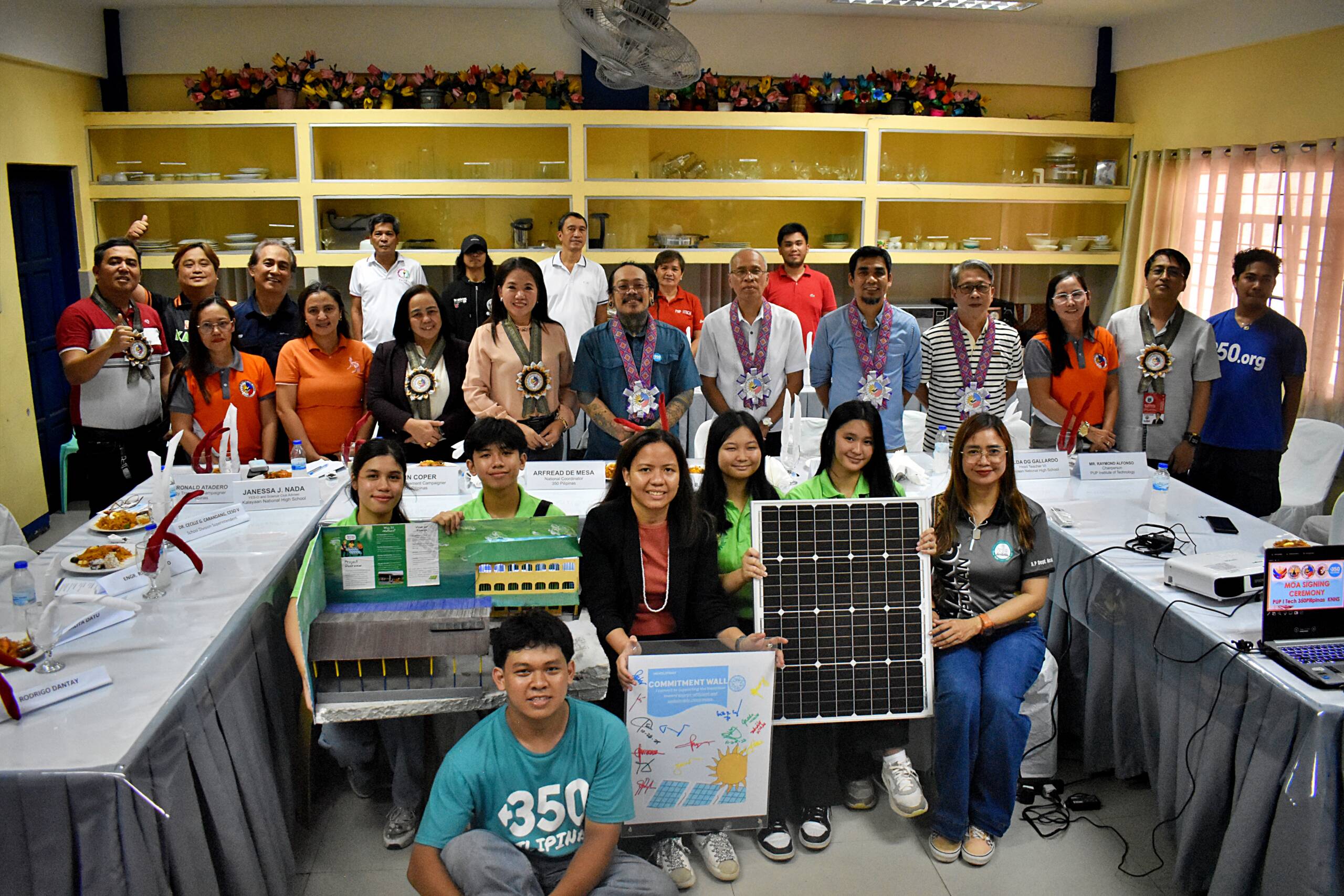
Memorandum of Agreement Signing at the Kalayaan National HIgh School in Caloocan City, Philippines in 2025. Administrators, 350 Pillipinas, and Polytechnic University of the Philippines Institute of Technology (PUP Itech) signed commitment on developing sustainable classrooms and programs in the school. Photo: Jorr Paraiso
As a Youth Engagement Campaigner, my work is to empower the youth through youth-led forums, leadership training, and real climate action. We conducted leadership training in partnership with the Lasallian Institute of the Environment and Amnesty International, where we gathered 40 student leaders from different schools in Metro Manila and equipped them with tools and frameworks to champion climate action in their own schools and communities.
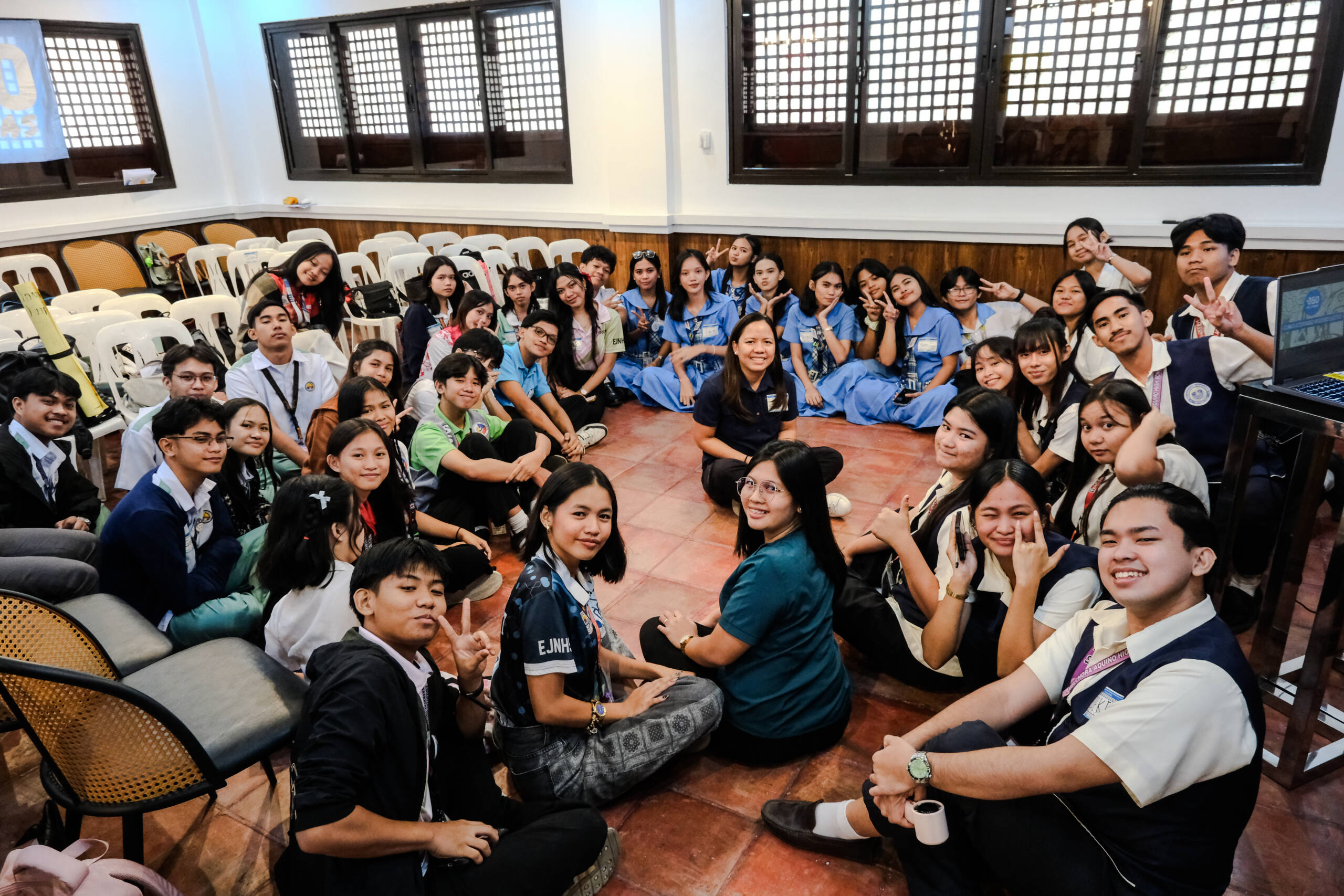
350 Pilipinas, Lasallian Institute For the Environment, and Amnesty International held its 𝐈𝐧stitutionalizing 𝐂𝐥𝐢mate Leadership a𝐧d 𝐄nvironmentalism (𝐈𝐧𝐂𝐥𝐢𝐧𝐞) at Tandang Sora Women’s Museum. This Training gathered student leaders from high schools in Quezon City and Caloocan City for a day of learning, collaboration, and youth-led climate action at the Tandang Sora Women’s Museum in Quezon City. This year’s theme: “𝑺𝒄𝒊𝒆𝒏𝒄𝒆 𝒊𝒏 𝑨𝒄𝒕𝒊𝒐𝒏: 𝑭𝒓𝒐𝒎 𝑪𝒍𝒊𝒎𝒂𝒕𝒆 𝑪𝒓𝒊𝒔𝒊𝒔 𝒕𝒐 𝑹𝒆𝒔𝒊𝒍𝒊𝒆𝒏𝒕 𝑺𝒄𝒉𝒐𝒐𝒍𝒔 𝒕𝒉𝒓𝒐𝒖𝒈𝒉 𝒀𝒐𝒖𝒕𝒉 𝑳𝒆𝒂𝒅𝒆𝒓𝒔𝒉𝒊𝒑” Photos: Nadia Cruz
Being the focal person for our interns in Kalayaan also shaped me in ways I did not expect. Guiding these young people through their first real climate work taught me how to listen better, explain the “why” behind every campaign, and create space for their ideas and not just mine. It reminded me that youth-centered work is about holding spaces where we plant seeds and that as we continue to equip students, our learning institutions must also advance and apply sustainable practices that drive climate solutions.
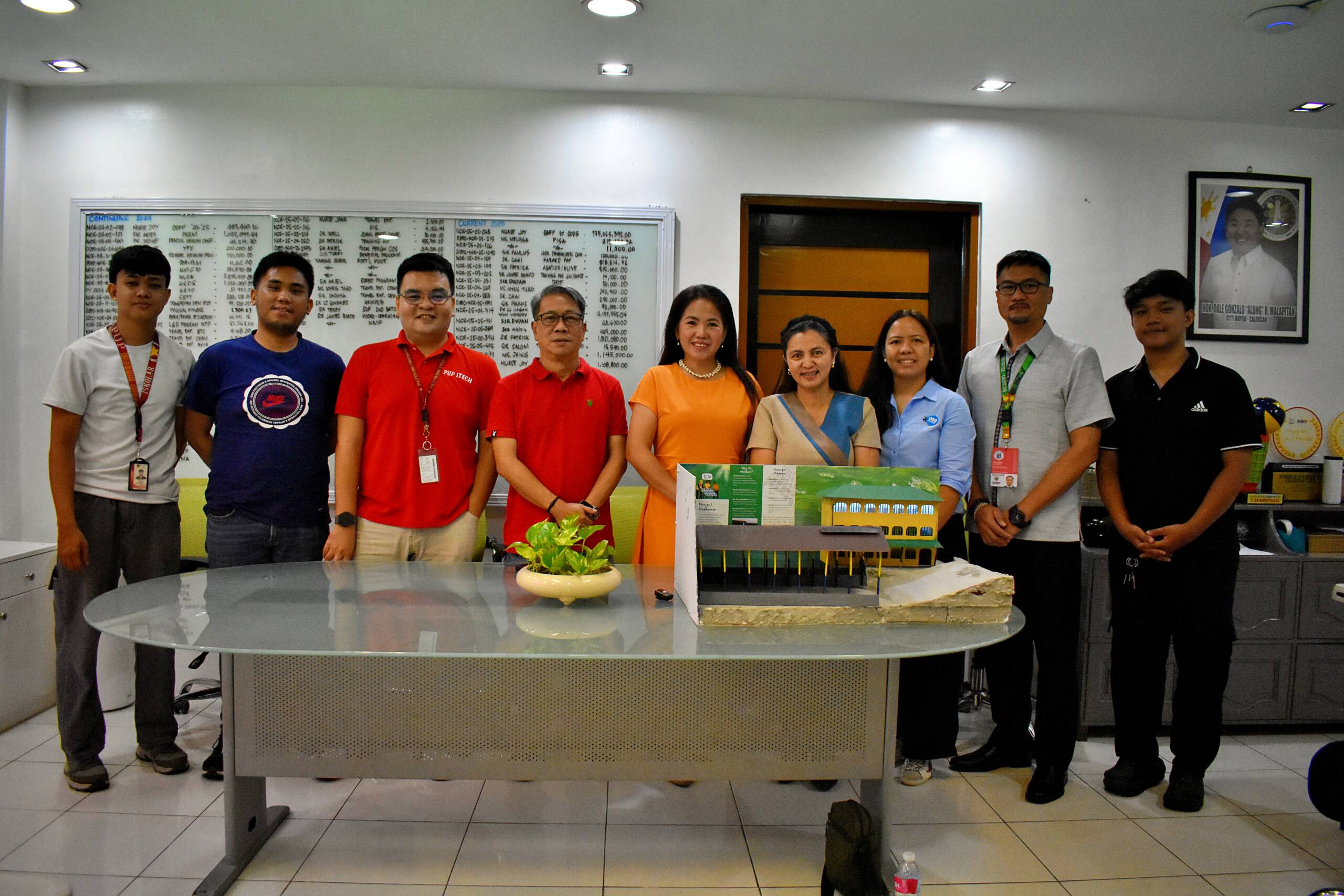
A prototype of the sustainable classroom, developed by 350 Pilipinas and PUP ITech, was presented to the School Division Office. The pilot classroom at KNHS aims to serve as a proof of concept for other schools to replicate and integrate renewable energy into powering classrooms and YES-O projects. Photo: Jorr Paraiso
The youth had questions, and I loved every single one.
The kids wanted to know about the Philippines. What it looks like, what the culture is, what beautiful places they should visit if they ever get the chance, and even what my hobbies are outside of work.
I told them I enjoy biking and hiking. Then I brought them on a little virtual tour of my country. I shared with them about Boracay, with its powdery white sand and crystal-clear water so blue it almost doesn’t look real. I told them about Mount Pulag, one of the highest peaks in the Philippines, where you can wake up above the clouds and watch the sunrise paint the sky. And I shared about the rice terraces of Banaue, steps carved into the mountains centuries ago by our ancestors, still standing today as a testament to how Filipinos have always known how to care for the land. To top it all off, I also mentioned the majestic Mayon Volcano in Albay, famous for its perfect cone shape.
“What is your dream for Planet Earth?”
At the end of the session, I asked the kids that one question, and I was amazed by their answers.
In their own simple and beautiful way, they already knew. They believed that they could do something and that we could do even more when we worked together.
One kid said she always brings her tumbler to help reduce plastic waste. Others shared that they love joining tree planting activities and that they always make sure to segregate their garbage. That filled my heart with joy. Even at their young age, they already understand that small habits will go a long way.
And one answer stopped me in my tracks. One of the students said, “I dream of no more war. I want peace for our planet.”
She was not just talking about climate. She was talking about everything. The chaos, the conflict, the heaviness that her generation is inheriting. And yet there she was, still hopeful. Still dreaming.
That moment brought me back to the last two years of my energy work in schools. For two years, I have sat across from school superintendents, principals, and head teachers; talked with club advisers; and navigated the rhythms of academic calendars. And what I have learned working with them is that when you align your vision with the school’s goals and priorities, doors open. Administrators become partners.
And what excites me the most is the students themselves. Based on feedback from their advisers, more and more students are not just asking how to join the movement; they are asking how they can do more. And what makes me even fufilling is that even after their term as officers ends, they choose to stay because they genuinely care. And that they still want to be part of the movement even as they move on to the higher levels.
This is exactly why continuous climate conversations in schools matter. Schools play a vital role in shaping our students. School is where values are formed, where identities are shaped, and where young people decide what kind of adults they want to become. When we keep the conversation going not just for one semester, not just for one activity, we are developing stewards of the planet. We are building a movement that does not stop when the school year ends. We are growing it, one student at a time.
A Room Full of Hope
It was a truly wonderful experience talking to these lovely and passionate youth from Indonesia. Bright, talented and curious individuals who are already thinking about the world they want to live in.
Do you work with young people? Talk to them about the planet. Ask them what their dream for the earth is. You might be surprised and inspired by what they already know.
We hope to continue amplifying stories of hope while helping build learning spaces where young people can truly thrive. Join us as we continue navigating youth-led climate initiatives and shaping spaces that turn learning into action..