
Beyond the Hour. Beyond the Energy Emergency.
The message is urgent and clear: it’s time to break free from fossil fuels and build a people-powered future. Beyond the hour, the call is clear—rise above the emergency.
Chuck Baclagon
On a darkened stretch of skyline in Quezon City, climate activists from 350 Pilipinas traced messages in light to mark Earth Hour—not just as a symbol, but as a warning and an invitation. The Philippines has entered a national energy emergency. Moments like this call not for silence, but for solidarity.
Because when fuel prices spike, the burden doesn’t fall evenly. It lands hardest on commuters waiting longer for rides, transport workers earning less each day, and families already stretching every peso. If an energy system leaves the most vulnerable carrying the heaviest load, then it isn’t secure at all.
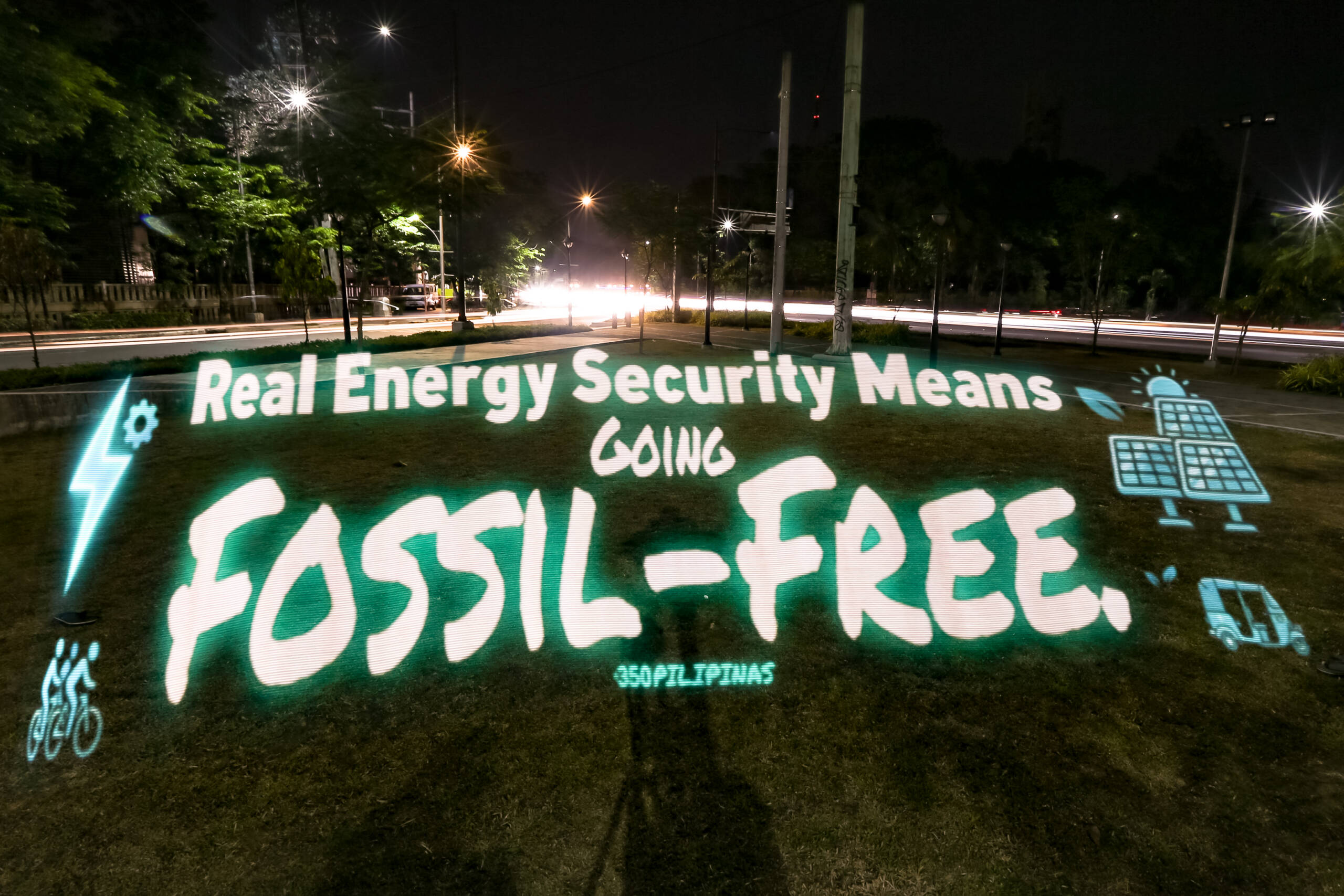
Activists light up the night with a clear message: “Real Energy Security Means Going Fossil Free.” To emphasize that energy security must move beyond temporary fuel substitution. While such measures are vital as immediate responses, long-term solutions must translate into policies centered on people and the planet.
Photo: Leo Sabangan II
This emergency makes something else clear too: dependence on imported fossil fuels leaves the country exposed to conflicts far beyond its shores. Wars elsewhere quickly become higher prices here. And that’s what fossil fuels do—not just heat the planet, but bind everyday life to instability we cannot control.
There’s a different path available. Real energy security comes from investing quickly and decisively in local renewable power and treating public transport as the essential public service it is. Sunlight is not imported. Neither is wind. And neither should mobility depend on the volatility of global oil markets.
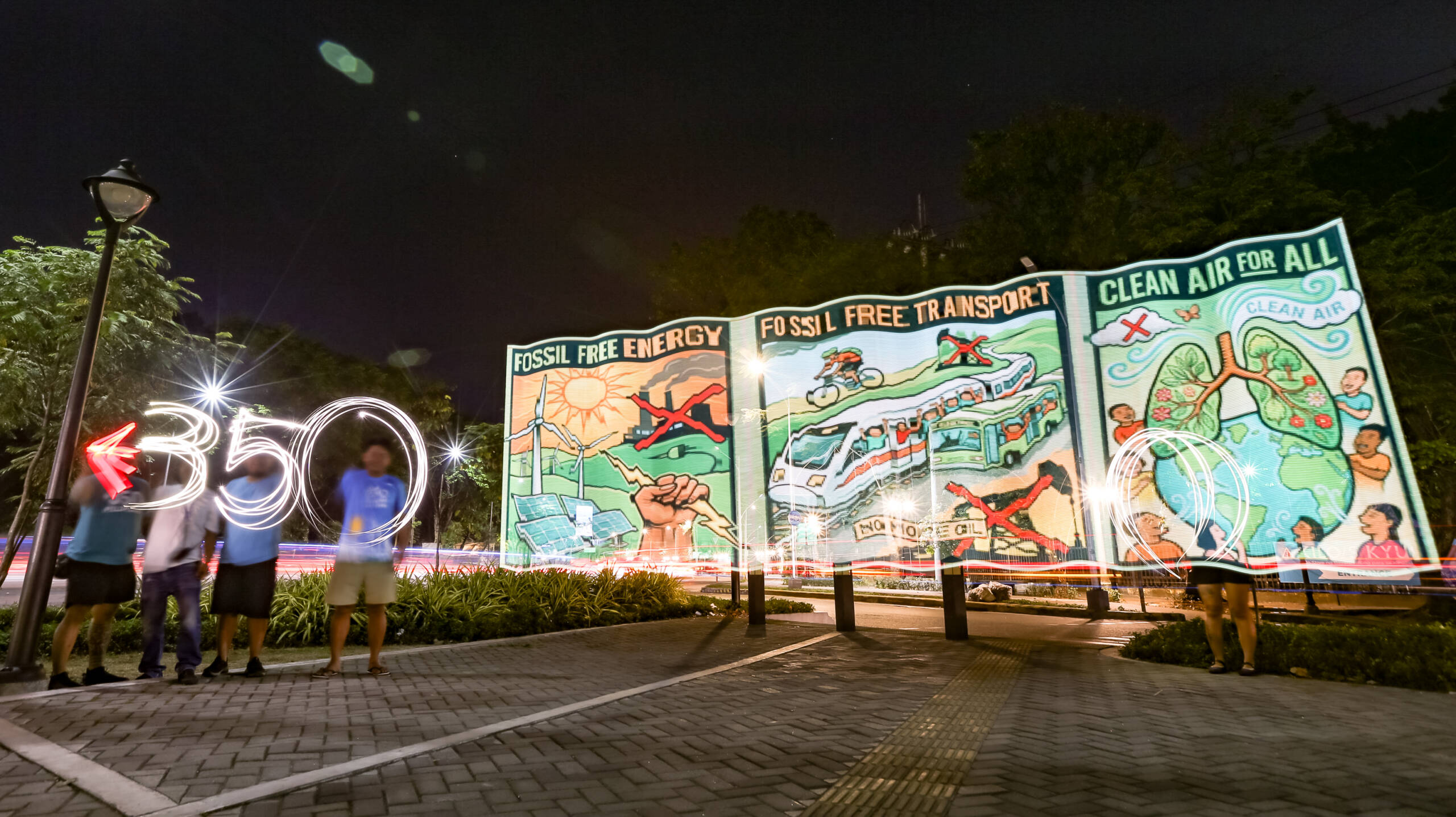
Activists illuminate the path forward: climate action that protects communities, ensures accountability, and builds a fossil-free, resilient future. Photo: Leo Sabangan II
That’s why proposals to step backward to dirtier fuels like Euro 2 are so troubling. They would trade short-term relief for long-term harm—more pollution, weaker public health protections, and delays in the transition to cleaner transport that communities urgently need.
Across the Philippines, many local governments have already shown what the future looks like: solar rooftops, sustainable transportation, inclusive mobility, and planning centered on people instead of fuel. The lesson isn’t that change is difficult. It’s that change is already happening—and it needs to move faster.

Activists light up the night to show that solidarity is the strongest response to the energy emergency, calling for local renewable energy, stronger public transport, and a people-powered, fossil-free future. Photo: Leo Sabangan II
There’s also a larger truth beneath this emergency. Fossil fuels don’t just power economies; they shape geopolitics. Again and again, they pull countries into conflict and deepen inequality. Moving beyond them isn’t only about climate—it’s about stability, dignity, and peace.
Earth Hour asks people around the world to switch off their lights for a moment. But moments like this ask something bigger. They ask whether we will keep returning to the same emergency—or finally begin building something better.
Beyond the hour. Rise above the emergency. Toward a fossil-free future.
Power for the People!
Beyond the hour, rise above the emergency.
Join the movement for a Fossil-Free World.