
Jojo Morillo
Last April 14, we at the Movement Building Team of 350 Pilipinas spent a full day on the ground, navigating the literal and figurative heat of Manila. It was a day of fieldwork that felt less like a series of meetings and more like the weaving of a two-way mirror—reflecting the systemic challenges shaping our cities while revealing the quiet but growing power within communities to transform them.
Our journey began in Baseco, meeting with Urban Poor Associates (UPA) and Kabalikat sa Kaunlaran ng Baseco, a pillar of the community since 2001. Sitting with leaders whose lives are rooted in one of Manila’s most climate-exposed coastal communities made the larger stakes of the energy transition unmistakably clear—especially at a time when the country is confronting an ongoing energy emergency that continues to expose how fragile and unequal our dependence on fossil fuels has become.
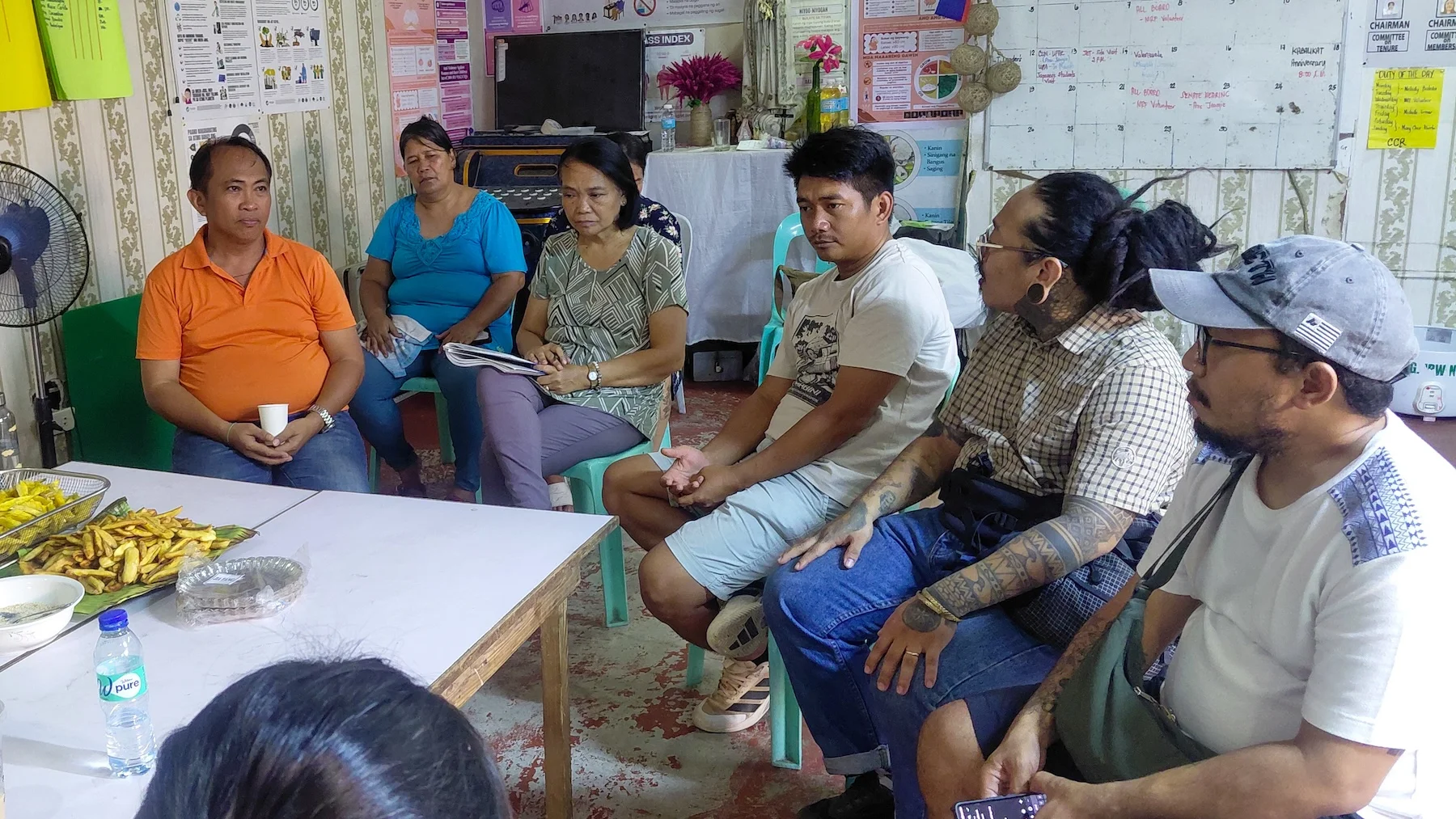
A meaningful dialogue rcentering equity and collective ownership to ensure the energy transition delivers both climate action and social justice where it matters most—in our cities. Photo: Johnny Guarin
Cities today are not just centers of activity—they are frontlines of the climate and energy transition. For many urban poor families, the energy crisis is experienced not as an abstract policy issue but as rising electricity costs, unreliable access to power, and heightened vulnerability during extreme weather events. These pressures are deepened by an energy system still tied to imported, price-volatile fossil fuels, where disruptions far beyond our shores quickly translate into real burdens at home. Decarbonizing cities, then, is not only about cutting emissions—it is about easing everyday economic strain and building resilience for those most exposed to both climate and energy insecurity. Cleaner, more locally grounded energy systems mean communities are less at the mercy of global fuel shocks and better able to withstand future disruptions.
The conversation with community leaders naturally moved toward renewable energy—but with necessary caution. Across many urban poor communities, there is understandable skepticism toward solutions that arrive fully packaged from the outside yet leave residents with little control over outcomes. Transitions that are not shaped with communities can easily reproduce the same inequalities they claim to solve.
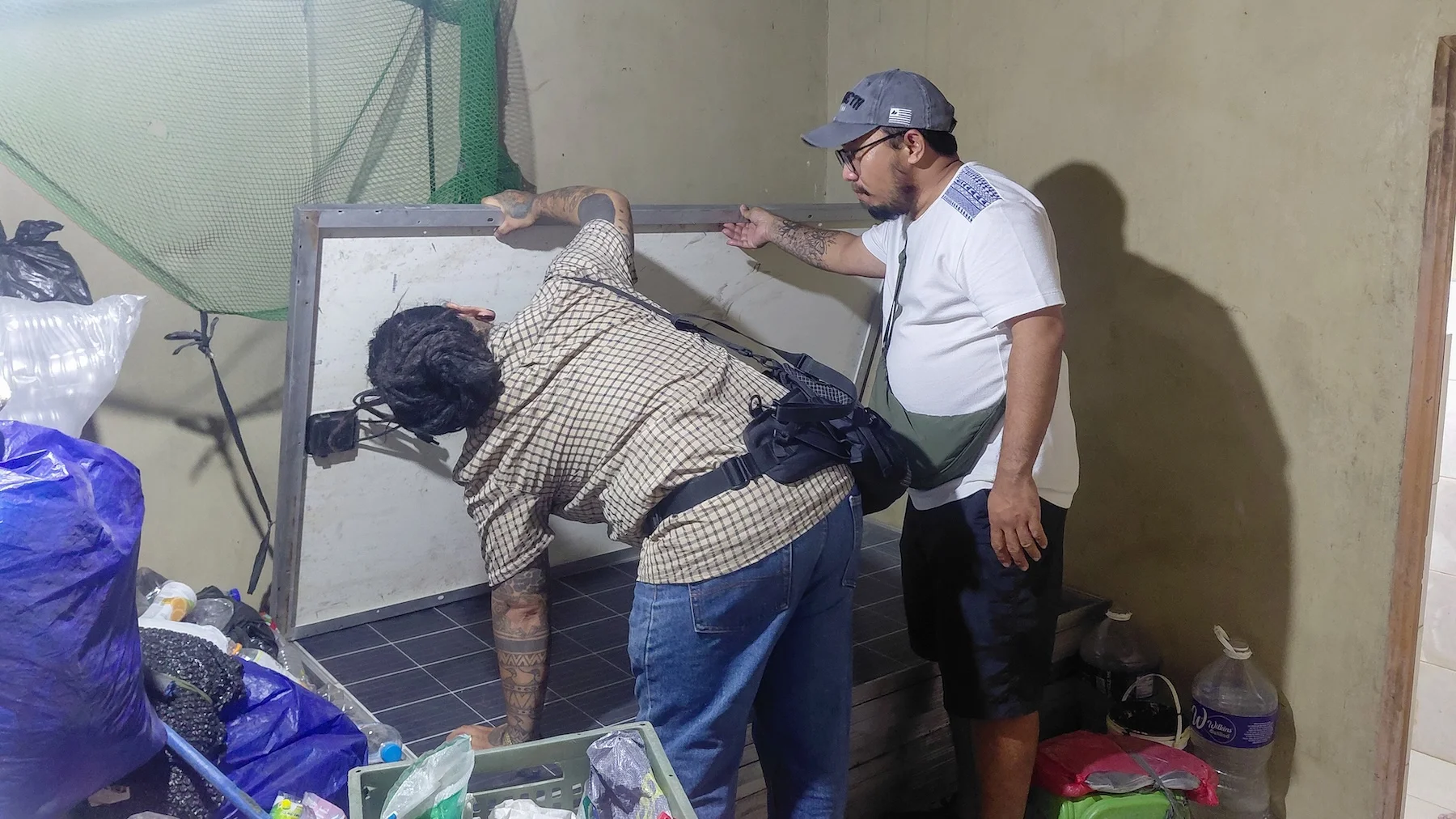
Inspecting a previously deployed solar panel in the community—checking not just if it still works, but whether it’s still serving its purpose. Photo: Johnny Guarin
Our partnership with Kabalikat is grounded in a different approach: supporting pathways where communities help shape how clean energy solutions serve their daily needs and strengthen disaster resilience. The goal is not simply to introduce new technologies, but to help build conditions where residents can participate meaningfully in decisions that affect their energy access, safety, and future. It reflects a shift from treating communities as recipients of short-term responses to recognizing them as essential partners in building locally rooted climate solutions that last.
Engagements like this are part of a longer arc of movement-building that centers the leadership of urban poor community associations in shaping what a just energy transition looks like in practice. By the time the 2028 national polls arrive, the ambition is not only to see climate issues raised in policy debates, but to help ensure that communities have already begun experiencing the benefits of cleaner air, safer neighborhoods, and more reliable, community-responsive energy systems. These partnerships show that a just transition is not abstract—it is something already being built through shared work on the ground.
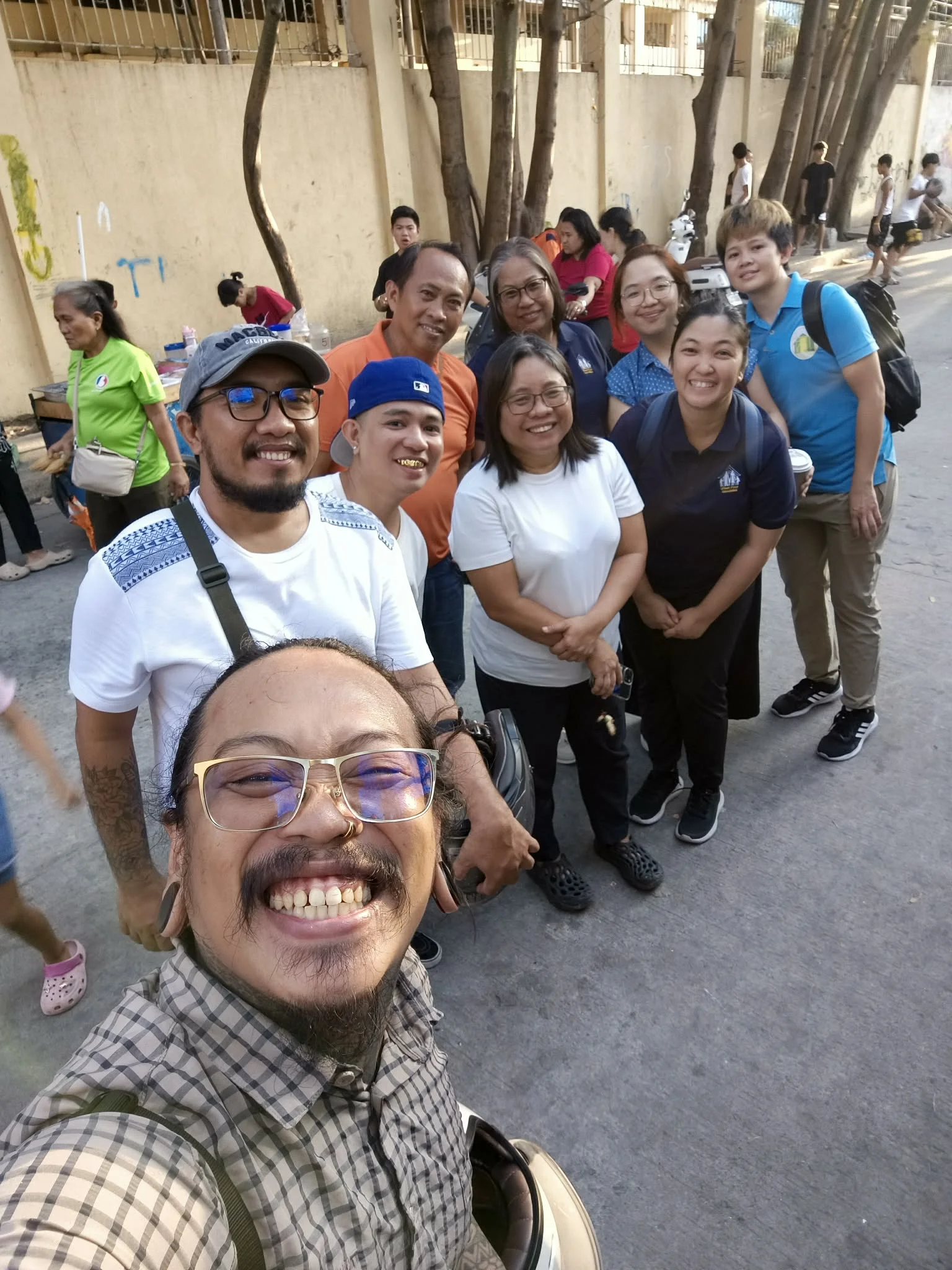
Quick selfie after a long day mapping a shared vision for Baseco.
The struggle is long, and the energy crisis is real. But the conversations in Baseco were a reminder that meaningful change grows from relationships, trust, and collective action. The transition will be bottom-up—or it will not be.
One quiet but powerful example of this is emerging through our joint working group with the community, now called BASECORE—Baseco Community-Owned Renewable Energy. More than a name, it is a shared space where residents, organizers, and partners are beginning to co-design what community-owned energy could actually look like in practice: not as a project delivered to Baseco, but as something built from within it.
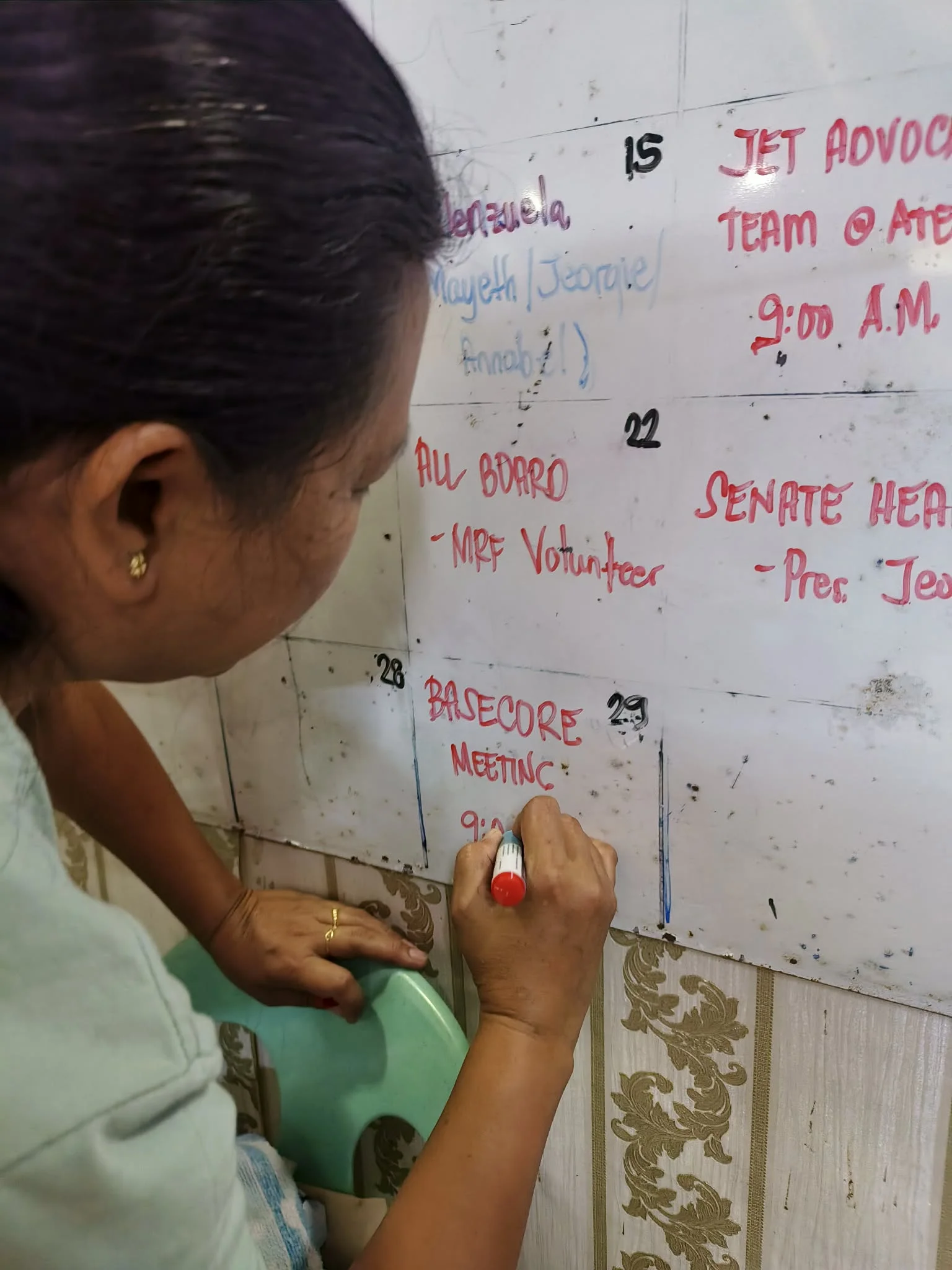
With a single stroke of the marker, BASECORE is written into being—more than a name, a shared aspiration taking form. Photo: Fread De Mesa