
Nadia Cruz
The potential of community-owned renewable energy (CORE) extends beyond technology; it is guided by people, power, and the planet. In our movement building campaigns for 350 Pilipinas this approach is reflected in the collaborative efforts of youth, professionals, civil society organizations, and universities working together to harness renewable energy. These initiatives help expand access to energy while advancing climate action and strengthening local resilience.
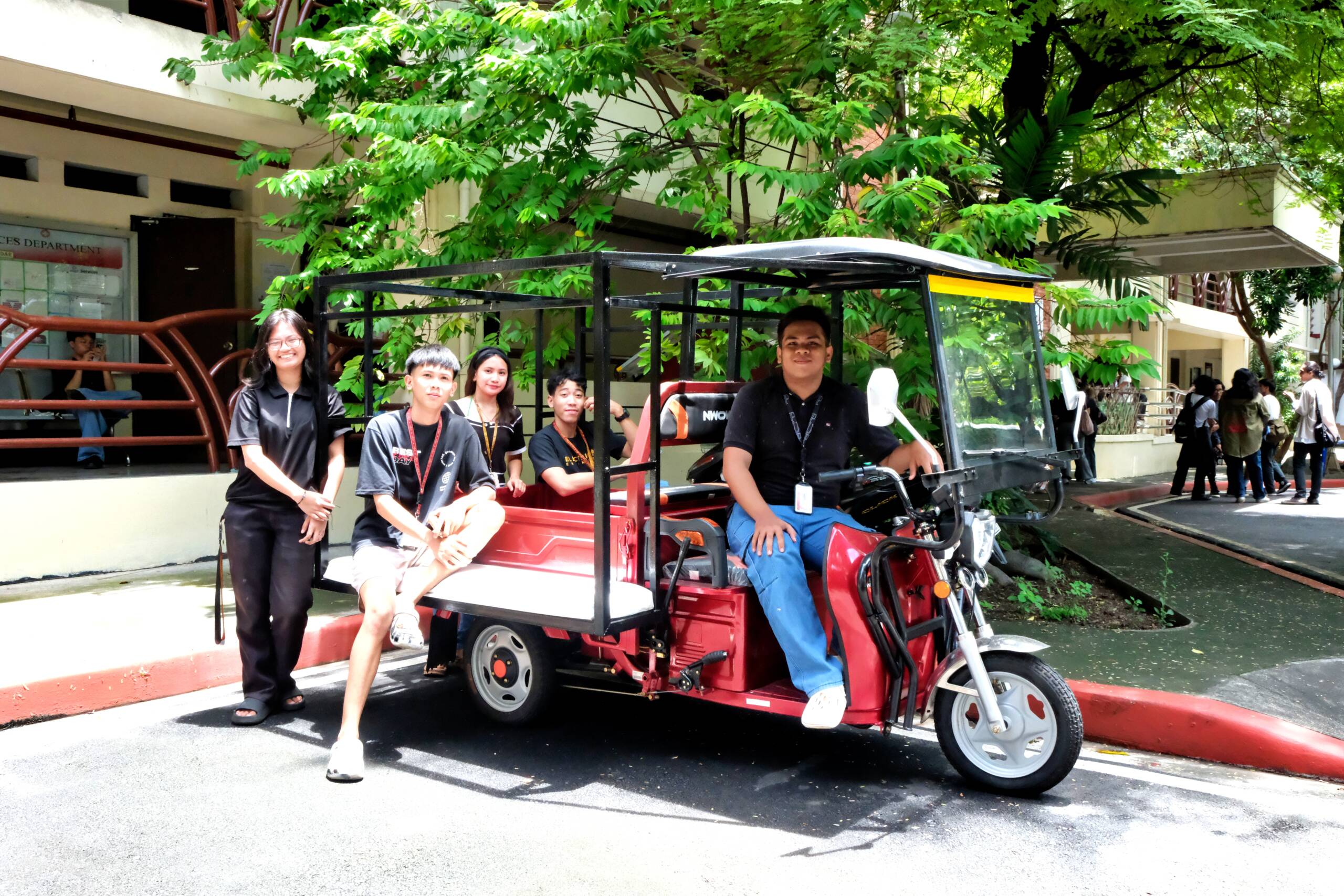
The PUP-ITech Students that developed the Watt-A-Ride Charging Station. Taken before the installation of the charging and solar panels. Photo: Nadia Cruz
The people:
In December, Watt-A-Ride, a community-owned, mobile solar-powered charging station developed by the PUP Institute of Technology Research and Extension (PUP ITech) and its Electrical Engineering Technology students, launched its first unit at the PUP Santa Maria Campus. The project is one of the three main community-owned renewable projects that are developed in 2025 through partnership with PUP Itech. Its predecessors, the Noortech Solar Charging Station in Itech and ProTech deployed in PUP Main Building.

Launch and turnover of the charging station project at the PUP-Sta. Maria Bulacan Campus. Joined by 350 Pilipinas, PUP-Itech, and the PUP-SMB Community. Photo: Jorr Paraiso
The project’s progress, after being implemented, created new opportunities for collaboration within the university, this time with the PUP Technology Business Incubation and Development Office. This partnership highlights how innovative initiatives such as this can support economic opportunities, green jobs, green entrepreneurship, decarbonization, and climate action.

Jawo Jayme, 350 Pilipinas Campus Engagement Campaigner spoke during the solar charging turnover ceremony at PUP-SMB. Jawo emphasized how decarbonization in a local context means communities working together to create solutions that fit their capacities and needs. Photo: Fread De Mesa
On January 21, an initial meeting was held with the PUP Technology Business Incubation and Development Office, through the PUP Institute of Technology Dean and faculty, together with the PUP Santa Maria Bulacan Director, to discuss next steps. These include exploring pathways for scaling the project to reach more communities and further equipping students to develop sustainable solutions that benefit both people and the environment.
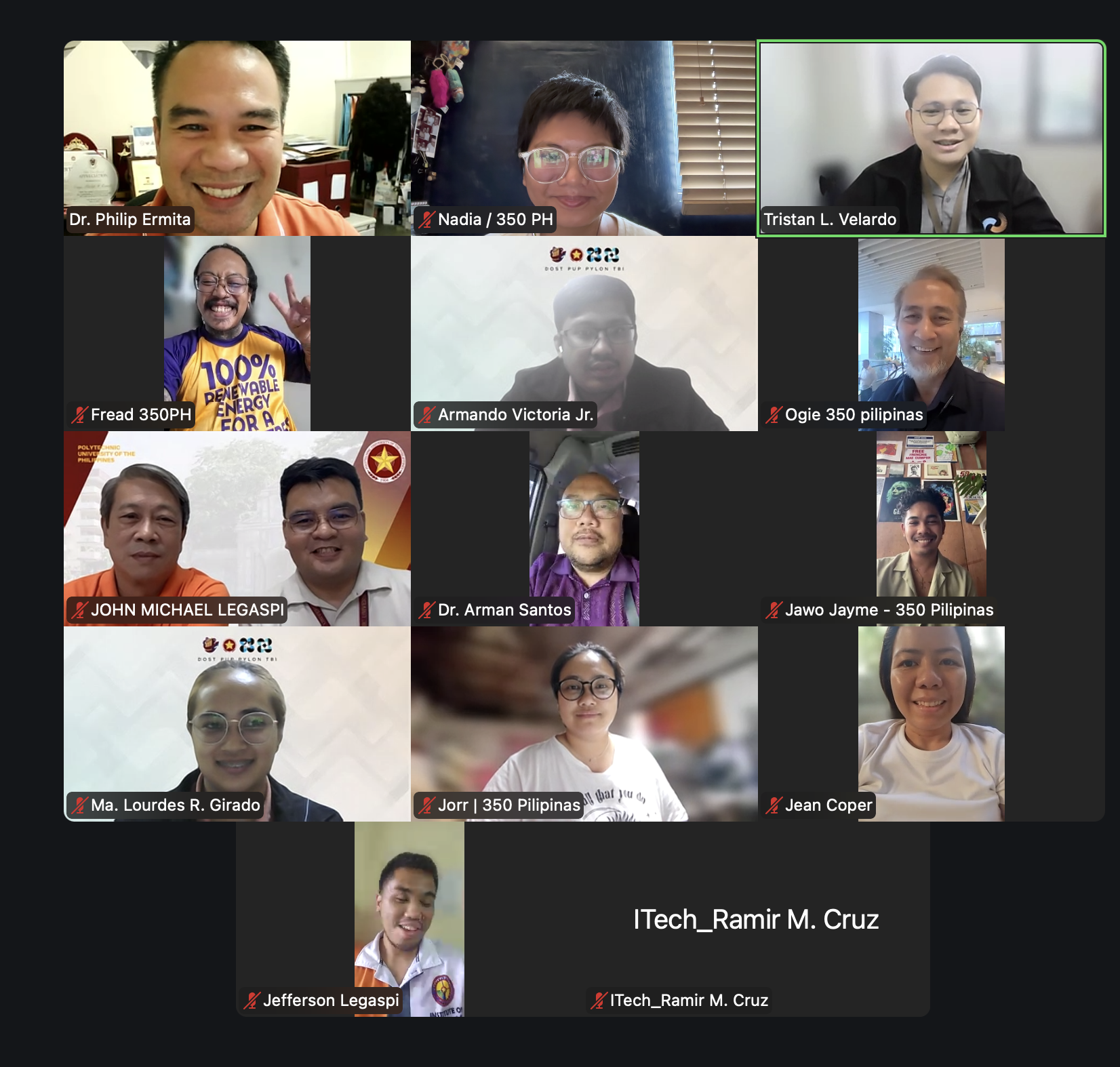
Initial meeting with the PUP Technology Business Incubation and Development Office (TBIDO) and PUP-Institute of Technology last Januart 21, 2026. Screenshot from Zoom
Power:
Watt-A-Ride provides reliable, off-grid energy that can be deployed on campus or during emergency situations. Equipped with solar panels and charging ports, a key feature of the project is the integration of electric vehicles (EVs) as the transport mode for moving the charging station. This approach demonstrates a sustainable and low-emission model for campus logistics.
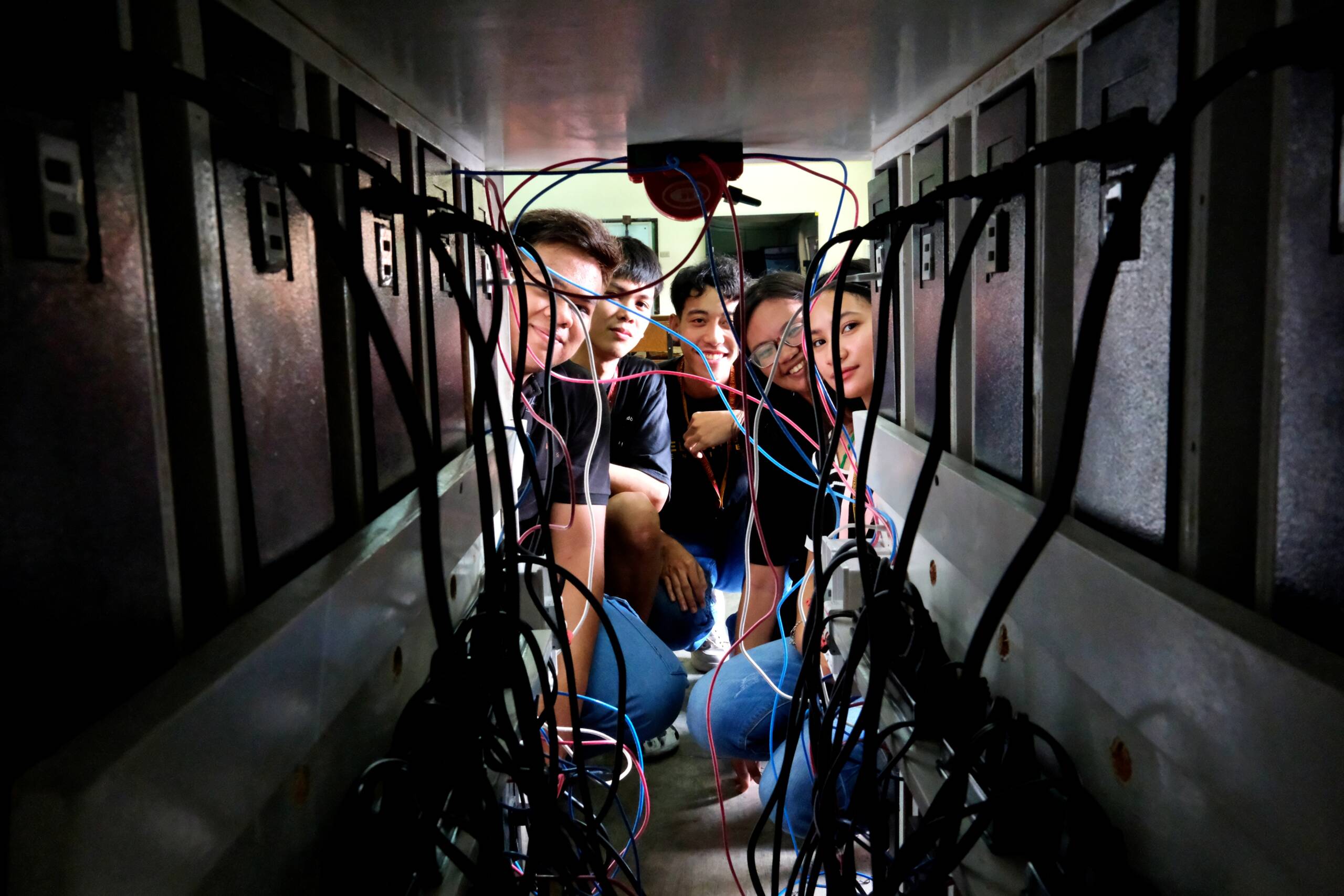
The back-end of the charging station. Students spent months developing the program installed in the charging station, troubleshooting the cables, and conducting tests to ensure that each portion is working without any issues. Photo: Nadia Cruz
Planet:
Community-owned renewable energy initiatives such as Watt-A-Ride highlight the intersections of climate adaptation, renewable energy innovation, and sustainable mobility. They offer a replicable proof of concept for how renewable energy systems can be built, sustained, managed, and shared within communities.
Watt-A-Ride was designed to strengthen resilience within the campus and surrounding communities. Developed and refined by students from the Electrical Engineering Technology program, the project demonstrates the role of youth as drivers of action, translating technology into practical, everyday applications and promoting the use of renewable energy as an alternative to fossil fuel dependence.