
Ara Alejo
2 weeks ago, I, together with colleagues from 350 Pilipinas, Jheny from our Sustainable Transport Program and Nadia from Communications, attended the Better Air Quality Conference 2026. Hosted and organized by Clean Air Asia at the United Nations Convention Center at Bangkok, Thailand on March 9-13 2026.
This is a gathering of different stakeholders, from Government institutions, Non-government Organization, People’s Organization, Scientists, Engineers, Doctors and Academe, Philanthropy and Financial Institutions from different countries around Asia. This gathering aims to share knowledge and new data about air quality and better ways on providing solutions about air quality. From transport, Energy, Agricultural and Industrial Waste Incineration to better planning for more sustainable cities and renewable energies.
Before the main conference, several pre-events were held that participants could attend. On the first day, Jheny delivered a presentation on our Life in a Bubble campaign, which was implemented in the Philippines and later replicated in Indonesia.
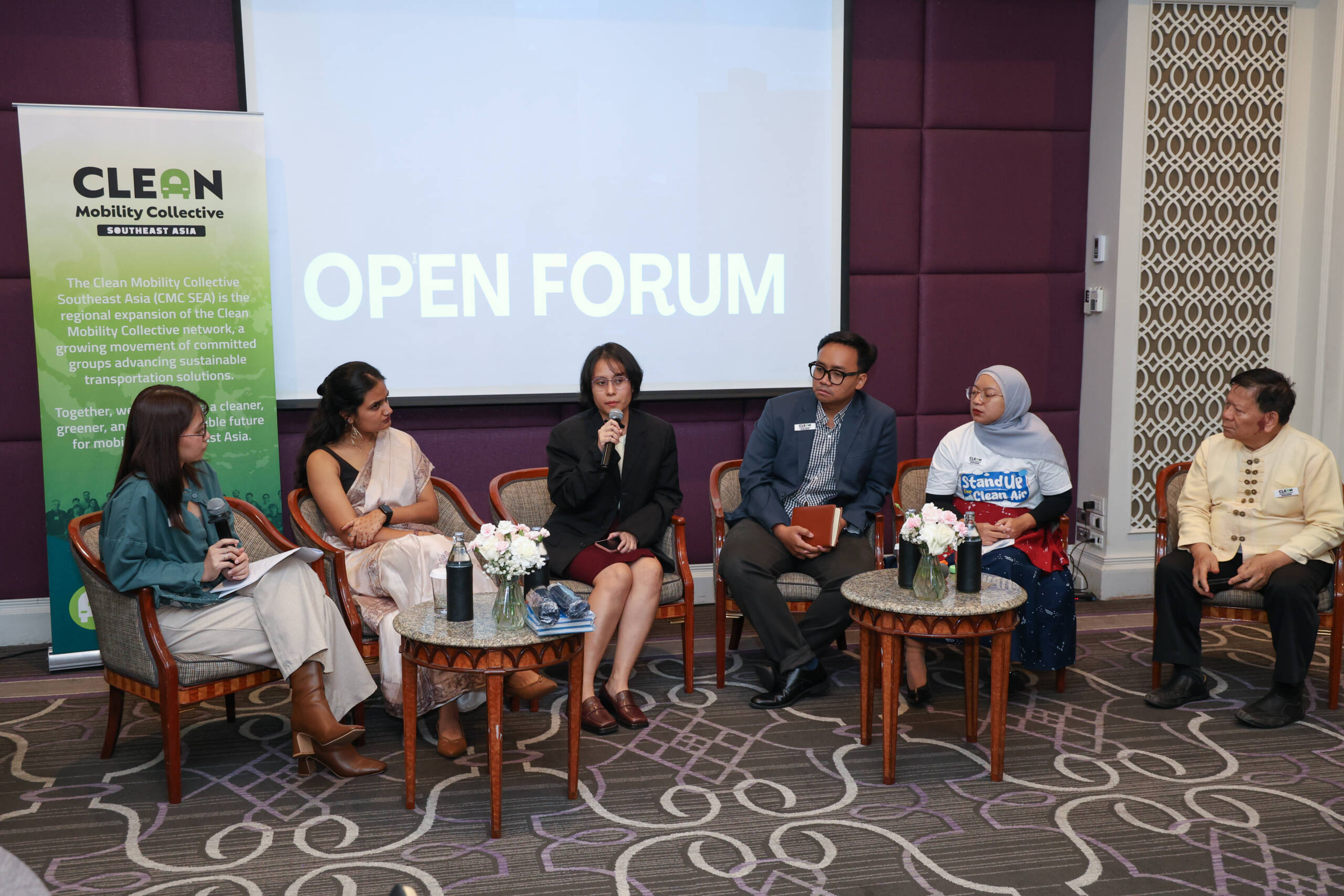
March 09, 2026 – Panelists share insights during the “Driving Action for Clear Skies: Inclusive Transport and Community-Led Clean Air Innovations in Southeast Asia and India” pre-event session of the Better Air Quality (BAQ) Conference 2026 at The Sukosol Hotel in Bangkok, Thailand. Photo: CMC Sea
Me and Nadia presented at the Science Communications Round Table Discussion (RTD) to present how we do our campaigns for clean air and build a narrative from engaging the public for awareness raising and how our campaign developed from targeting the general public to a narrower stakeholder group of the policy makers and implementers. The RTD was organized by Clean Air Asia’s Communications team and provided an avenue to apply the Science Communications Toolkit.
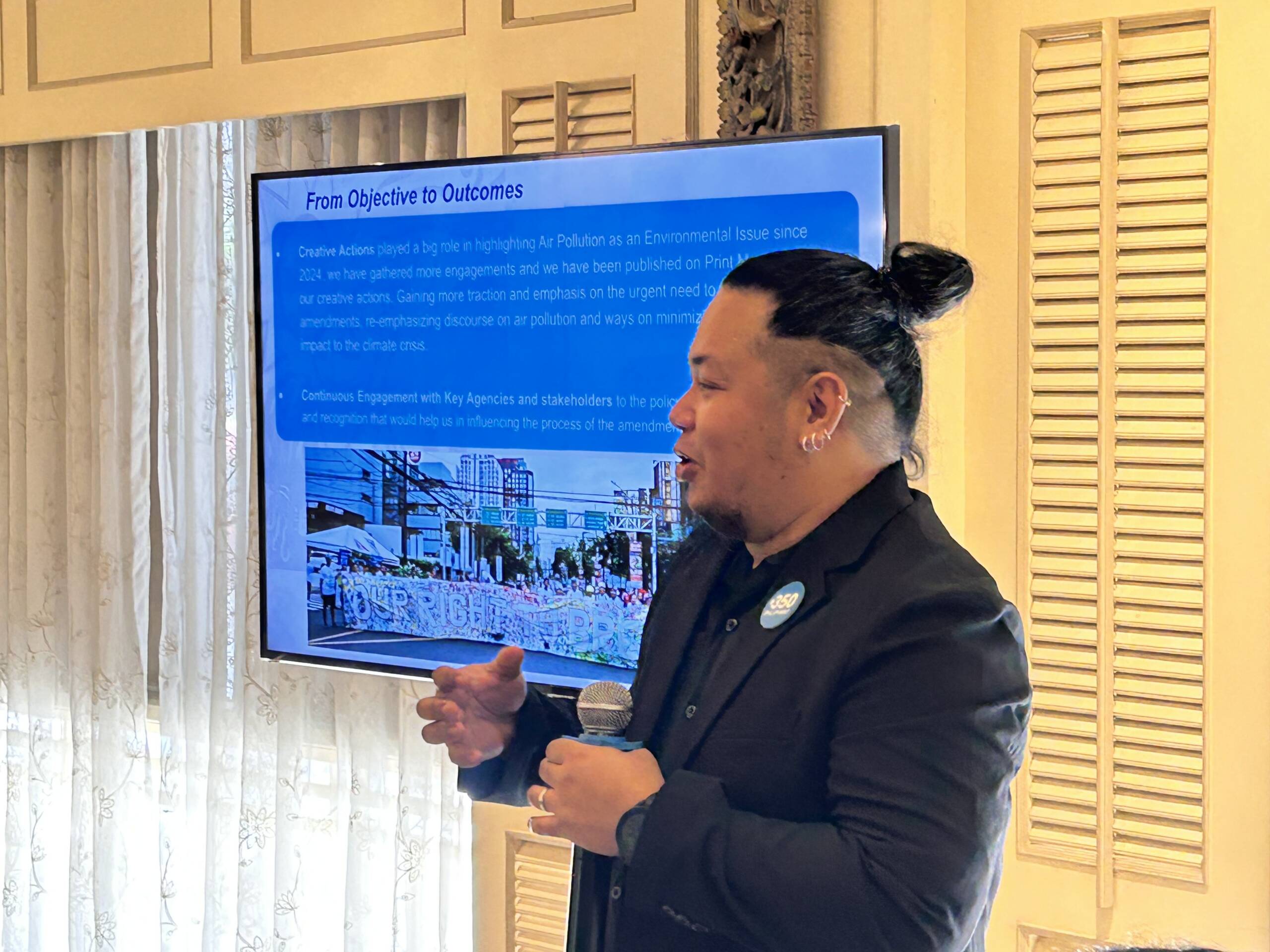
Photo: Nadia Cruz
In the main conference proper, we attended plenary sessions and breakout sessions, we attended sessions more related to our work so after plenary sessions we attended different sessions, Jheny focused on Transport related sessions, Nadia focused on Narrative building and movement building while I focused on Topics related to Network Building and Policy Advocacy.
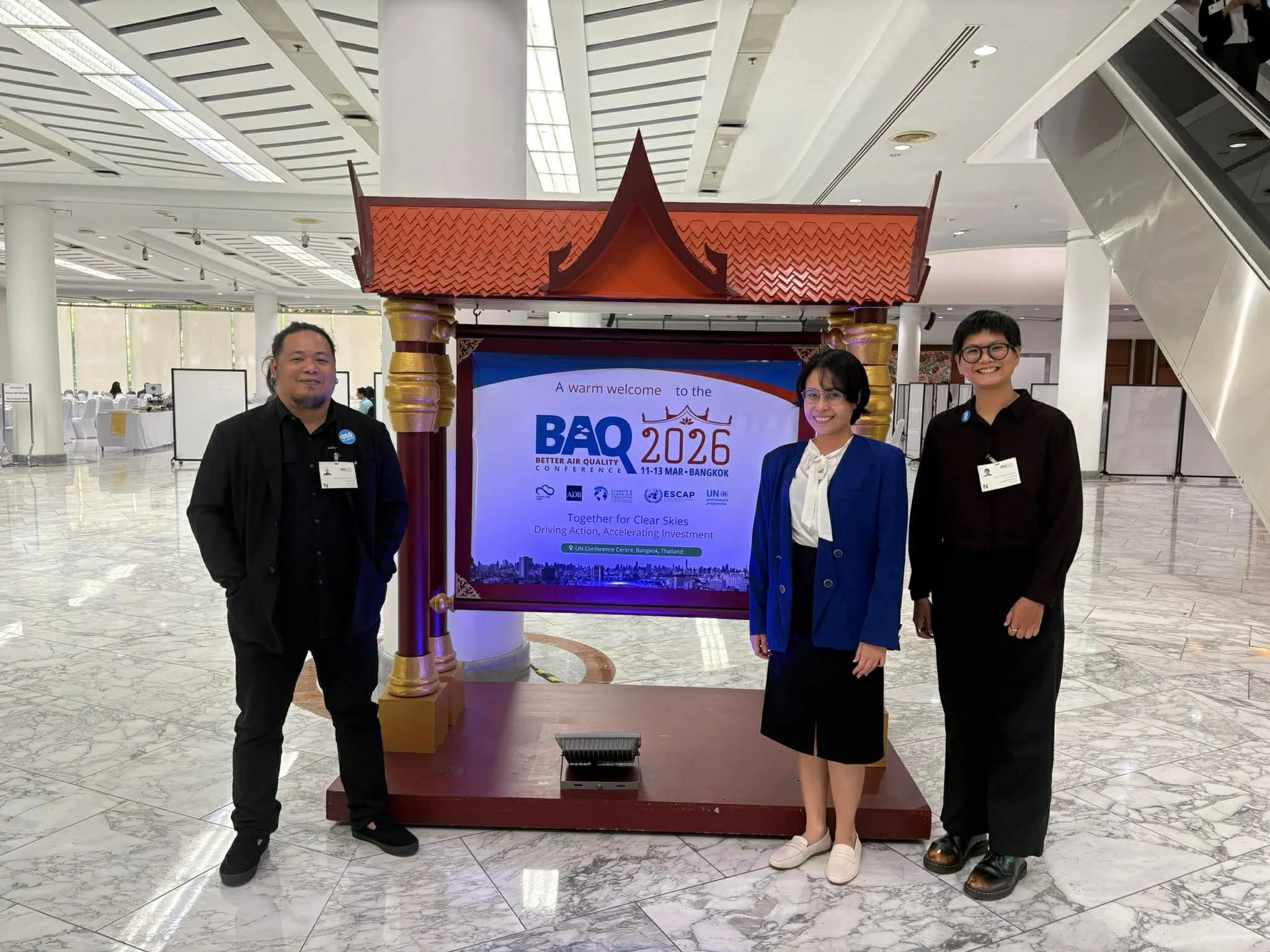
350 Pilipinas’ campaigners, Clean Air program campaigner, Ara Alejo, Sustainable Transport campaigner, Jheny Dabu, and Communications manager, Nadia Cruz.
I attended the sessions on Pathways for Clean Energy, where resource persons shared their work on air quality control and monitoring. Representatives from Vietnam, Indonesia, and the Philippines also provided updates on their current air quality monitoring systems and action plans.
I also joined the sessions on People-Centered Solutions, where speakers presented local initiatives focused on sustainable transport and pedestrian-friendly development. Additionally, I participated in the World Café workshop, which provided an opportunity to engage directly with resource persons and explore their challenges, lessons, and successes in greater depth.
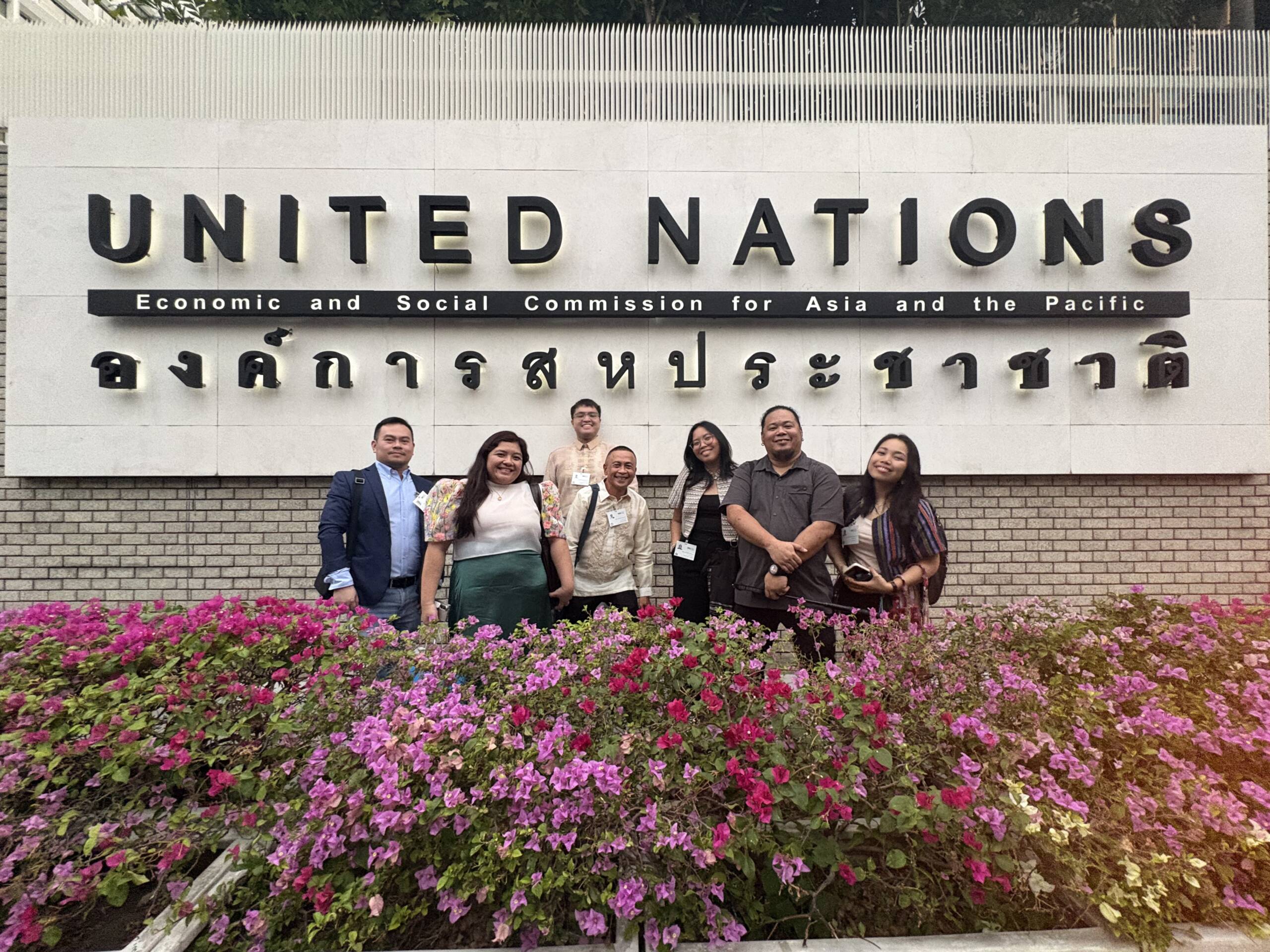
With CSOs partners from AktivAsia, hilippine College of Chest Physicians, HealthcareWithoutHarm as members of the Cebu Clean Air Network. Photo: Nadia Cruz
I learned a lot in the plenary sessions, latest data on Air Quality in the region, current progress on efforts for Air Quality Control and Action Plans, latest technology on air quality monitoring and emission control, best practices for policy and infrastructures and on how to access resources from philanthropic organizations and funding institutions and building networks to push for policy changes.
We also manage to sneak in meetings with different organizations and philanthropy organizations to explore more work and collaborations in achieving Better Air Quality. Also meeting again in-person networks we’ve worked with from other countries.
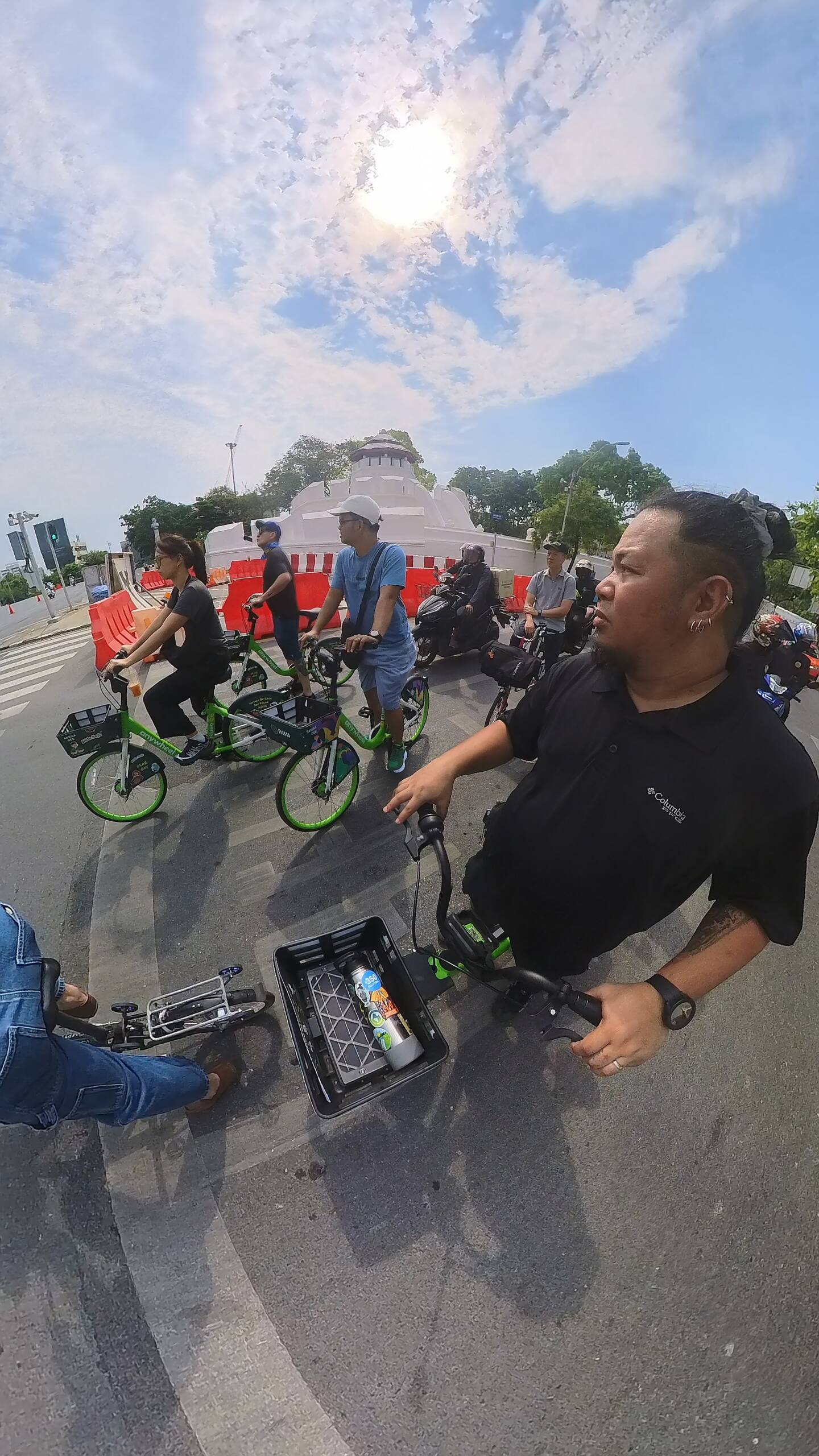
On the last day I also had a privilege to be invited to bike around Bangkok, and fellows from Bangkok Metropolitan Administration’s Traffic and Transportation Department and Thailand Walking and Cycling Institute Foundation (TWCIF). They toured us in some of their projects, showing their efforts and best practices for Cycling and Pedestrian infrastructure. I really enjoyed the Klong Ong Ang Art Walking Street. It has a beautiful history and so many murals done by different artists.
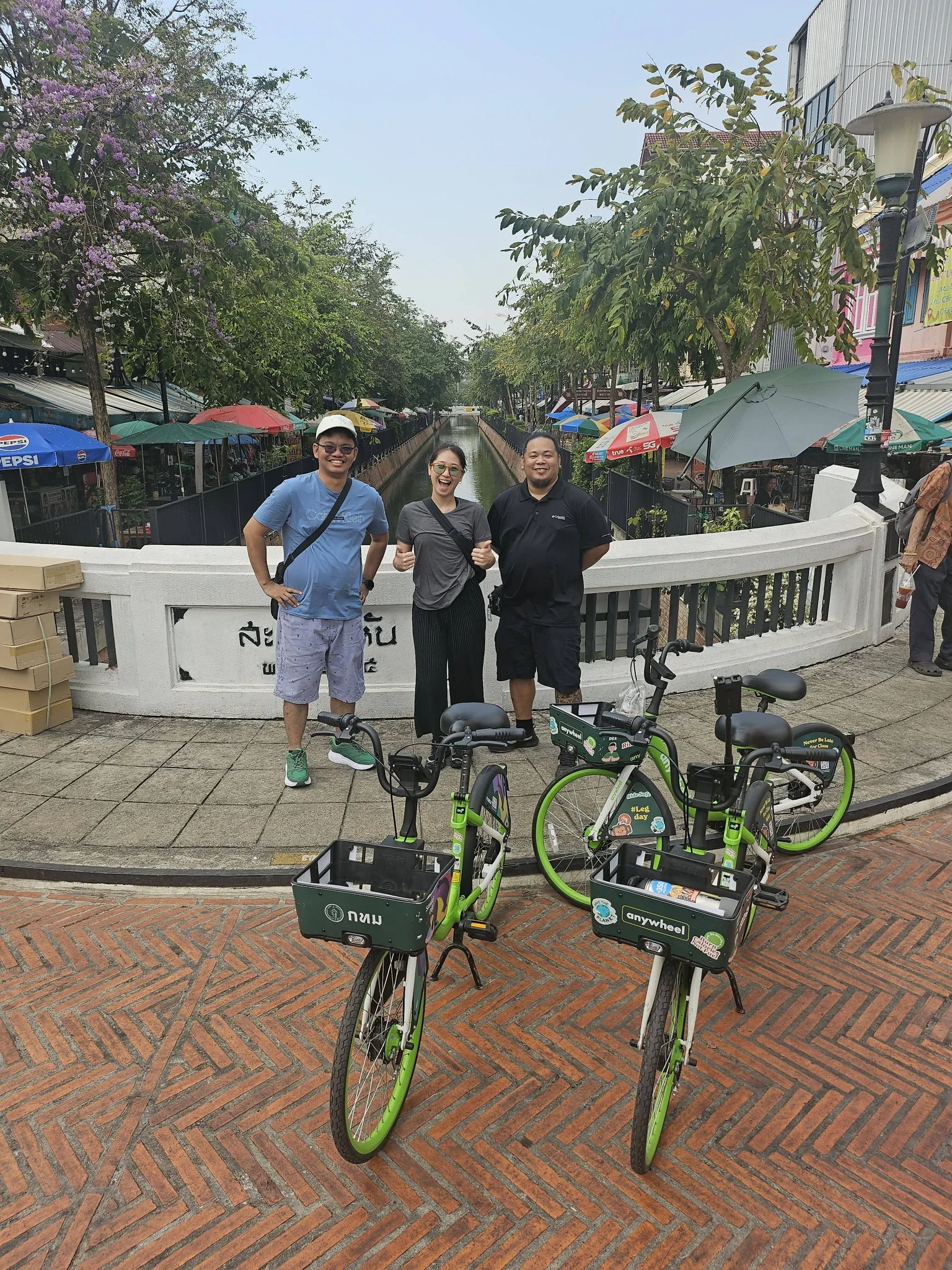
With Clean Air Asia, Institute for Climate and Sustainable Cities and Clean Mobility Collective SEA during the bike tour
On a side note, I find myself actively looking for public parks and open green spaces even in Bangkok. Part of it is practical—I don’t always have my bicycle, so I tend to go to places that are accessible on foot—but more than that, it comes from appreciation of what these spaces offer, especially in urban environments. Parks are not just areas for leisure; they play a crucial role in improving air quality by helping diffuse pollutants, absorbing carbon emissions, and lowering ambient temperatures. In dense or polluted areas, parks become essential pockets of relief, supporting both environmental health and people’s well-being.
At the end of the conference, something really stuck in my head. The Clean Air Advocacy is not a simple air pollution campaign, it is highly technical, it is health driven, and politically driven. But it is actionable. There is a lot of technology for monitoring, for control especially in energy and transport. The problem is where governance and political will is needed.
In the Philippines, we need our policy makers to address this almost 3 decade Law, the Philippine Clean Air Act. We have one of the oldest clean air laws in southeast Asia but we are still way beyond our air quality guidelines and policies to address air pollution. We need to fast track the amendments because we recognize there are efforts on updating our values but also there is urgency because of the worsening air conditions. Prioritizing people over companies.
We need to uphold the coal moratorium, and we need more stringent guidelines for retiring coal plants, and restrict it from being retrofitted to be another fossil fuel power plant. We need to incentivize Renewable Energy Projects especially decentralized and community owned or managed projects. Prioritizing people centered solutions over corporate profit.
We need to upscale our public transportations. If Light Rail Transits are not yet feasible at this moment, why not develop Bus Rapid Transits in heavy traffic areas, Edsa carousel can be retrofitted and have more connectivity to other public transport lines. Also BRT is feasible not just in EDSA but in Quezon Ave, Ortigas, Roxas boulevard, C5 even Aguinaldo highway and areas not yet serviced by LRTs. We need more infrastructures for Pedestrian and Cyclist, and policies safeguarding the Light Electric Vehicle Users. Prioritizing movement of people not cars.
In Urban Centers, we need to help local efforts for decarbonization and clean air projects, We need to champion best practices for pedestrian, cycling and public transportation infrastructures, we need to promote more tactical urbanism projects like Car-free Week Ends also promotion of development of more public and free pocket parks in the metro. Not just in malls and business districts. We need to build more green spaces. Prioritizing health and environment.
So where do Clean Air Advocates position themselves in this campaign? I am not an expert in the technical and scientific dimensions of the Air Quality Index, nor in treating the health impacts of air pollution, and I am not a policy lobbyist. But what we can harness is our ability to build bridges, bringing together scientists, medical doctors, and government agencies.
Because air pollution affects all of us, it is not just an environmental issue, but one that also shapes public health and the economy.
Our role right now is on how to communicate this heavily technical and scientific knowledge from our experts to more people, more stakeholders, building narratives on the proof of concepts made to address the crisis, building momentum for Government Agencies to provide policy changes and infrastructures.
A huge part of it is to build stronger movements and networks sharing the same advocacy and navigate solutions to air pollution that would also entail moving away from our reliance on fossil fuels, developing a more low carbon society and having a more livable, healthy, cleaner future.
Alongside fellow advocates, the campaign for better air quality is doable and actionable.
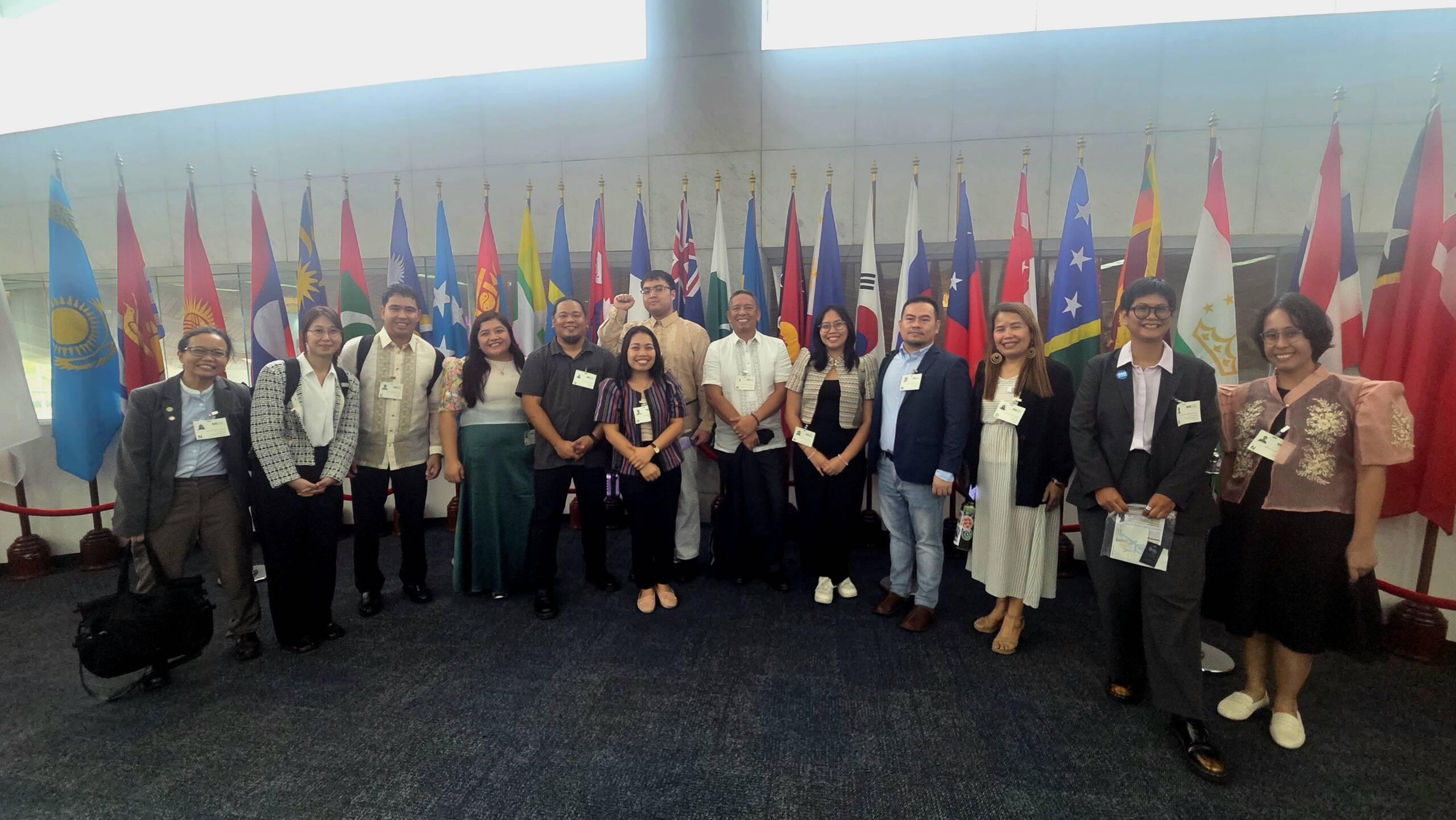
We just need people to (again)care and make efforts for our air and our environment, because HAVING CLEANER AIR TO BREATHE IS A RIGHT!