Pipelines in our Backyard
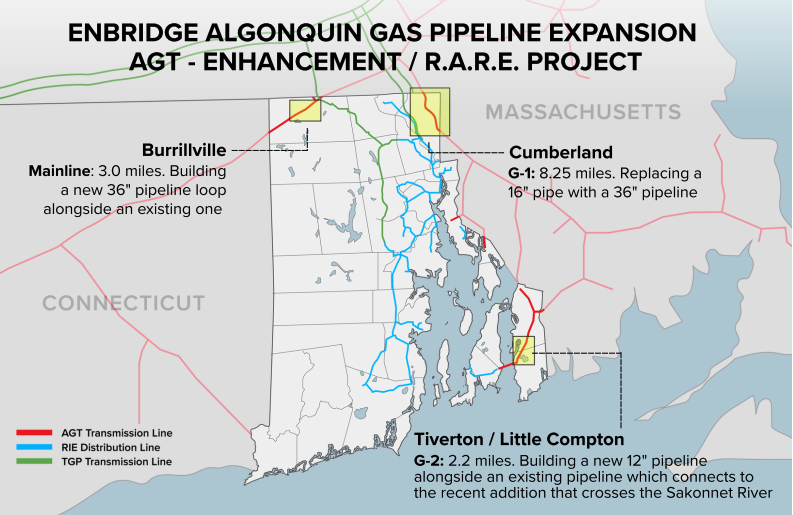
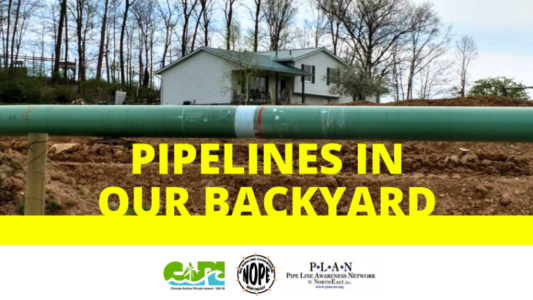
Enbridge, which owns and operates the Algonquin Gas Transmission (AGT) pipeline, is proposing upgrades and expansions in Rhode Island. In response, CARI recently co-hosted a series of community education sessions in Burrillville, Tiverton, and Cumberland alongside No Pipeline Expansion (NOPE) and Pipeline Awareness Network (PLAN-NE). The “Pipelines in Our Backyard” sessions aimed to help members of the public better understand what these proposed projects mean for their communities—particularly the safety, environmental, and public health risks—and how to engage in the process by demystifying industry jargon and sharing resources.
About the project:
The AGT is a high-pressure pipeline system that carries gas long distances across state lines. The proposed “enhancement,” known as R.A.R.E. (Reliable, Affordable, Resilient Enhancement), plans to replace existing pipeline segments or install significantly larger pipes—allowing more gas to move through the system and extending the life of this infrastructure for decades. Projects like this aren’t just maintenance—it’s an expansion. That means locking in greater fossil fuel use at a time when we need to be moving away from it. And because pipelines are long-lived infrastructure, decisions made now will shape our energy system for decades to come.
Read more here: Project one-pager
Missed the Presentation?
If you weren’t able to attend, you can explore the full materials here:
🎥 [Watch a recording on Youtube]
📄 [Access a PDF of the slide deck]
🔗 Enbridge’s Website page about this Project
🔗 NOPE Guide: Who is Enbridge?
🔗 Future of Heat Initiative: “Paying More for Less”
Key Takeaways
In order to prevent future gas expansion, we need to reduce our reliance on it. We covered three key ways that we can do this:
1. Energy Efficiency
Our grid uses the lowest-cost energy sources first—typically renewables—and turns to more expensive sources like gas as demand increases. When demand is high, gas plants are used more often, driving up costs. The fastest and most cost-effective way to reduce both emissions and energy bills is to use less energy in the first place. Efficiency lowers overall demand, reduces household costs, and eases strain on the grid.
Learn how you can improve your home’s energy efficiency here
Read the RI Energy Efficiency Council’s 2025 Annual Report
2. Clean Energy
Expanding renewable energy like solar and wind reduces reliance on imported fossil fuels and helps stabilize energy costs over time. Gas prices are volatile and influenced by seasonal demand and global events. As we add more renewable energy to the grid, we rely less on these expensive and unpredictable fuel sources.
Read ISO-NE’s regional power grid profile & ISO-NE’s “how wholesale electricity markets work”
How clean energy lowers the price of electricity on the wholesale market
3. Electrification
Transitioning homes and buildings from gas to electric systems and appliances—powered increasingly by clean energy—is key to improving safety, reducing pollution, and building a more stable energy system. Often the electric appliances are the most efficient too, like heat pumps. In RI we also have a commitment (the Renewable Energy Standard) to run or offset our grid with renewables by 2033.
Rewiring America’s guide to going electric
These are also three areas that CARI regularly advocates for — so make sure you’re signed up for our email list to be notified when there’s a chance for action or other ways to engage
What’s Next
Enbridge will be hosting official information sessions in these communities this April, with the first taking place in Wrentham, MA on Earth Day (April 22). These sessions are an important opportunity to ask questions, raise concerns, and engage directly with the company. This is also a chance if you have already granted permission to survey to rescind that (if you need help with this please email: [email protected]).
The info sessions will be hosted in Cumberland, RI; Mapleville, RI; Bellingham, MA; and Little Compton, RI the last week of April. If you have questions, would like to know more, or are interested in attending let us know, please email: [email protected].
This project is currently in the Pre-Filing stage under FERC Docket PF26-7. AGT filed their starter Resource Reports with FERC on April 6th, 2026. The G-1, G-2 and Mainline of this project are now called “L36D Pipeline Loop infrastructure and software for compressor update”. AGT intends to file a formal application in October 2026 and at that point the project will receive a new docket number, starting with “CP” for Certificate Proceeding. We’re not at the point where you can comment with FERC yet, but stay in the loop and we will notify you when it’s time!
Stay in the Loop
If you’re interested in staying engaged on this issue, we’re creating a Google Group (as a subgroup of NOPE) to share updates, resources, and opportunities to take action.
If you have questions or want to get involved, sign up here: